âI donât want to cancel himâ: Rose Boyt on confronting the gaze of her father, Lucian Freud | Culture
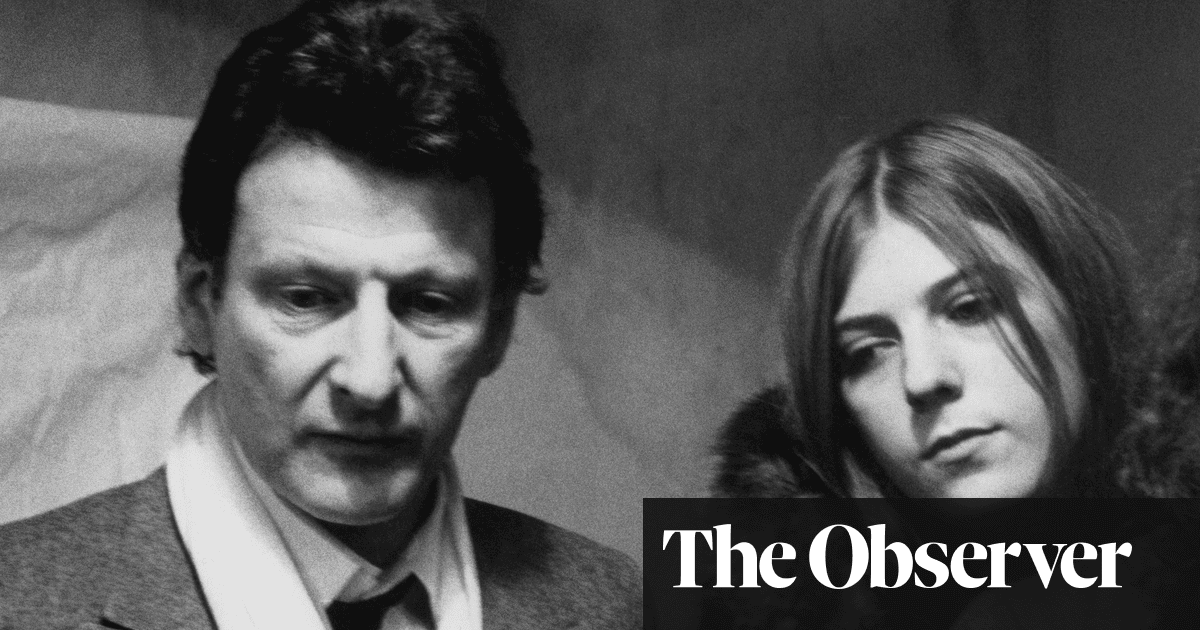
Rose Boytâs memoir, Naked Portrait, is, in the narrowest sense, her account of sitting for three paintings for her father, Lucian Freud. In the first, she sprawls, unclothed, legs spread wide on her fatherâs chaise, aged 18. In the second, at 31, she is buttoned up in a dark shirt, hair cropped, refusing the artistâs gaze. And in the third, at 39, she perches on a sofa arm, beside her husband, Mark Pearce, his son Alex, and their new baby Stella, in a homemade floral patterned dress.
You might say that the loose triptych represents a sort of allegory of independence for Boyt, from the wildly overbearing legacy of her father, and in some ways her book has that sort of triumphant, survivorâs note. But, as with anything concerning Freud, the reality is way more complicated than that.
Boyt, one of Freudâs 14 acknowledged children, is now 65. She has a special place in the famous pantheon of heirs in that Freud chose her, alongside a lawyer, to be the co-executor of his £96m estate, a process that has occupied her for a great deal of the 13 years since his death. One way of thinking about her memoir might be as a climax to that other consuming task. Plenty of people have had their say on Freudâs entirely singular life (âI donât read any of that crap,â Boyt says) but no one is better placed than her â also the author of three novels of chaotic families â to weigh its extremes.
At the heart of her memoir is a diary that she kept when she was sitting for the middle portrait, which she has now re-examined in light of her own experience of parenting and therapy and #MeToo: âUntil I had read the diary I had completely forgotten all that sex talk [with Dad],â she writes at one point, of her fatherâs compulsion to overshare with her about his wolfish libido. âI just smiled and laughed when I should have put my hands over my ears and screamed: SHUT UP YOU SICK FUCK,â she suggests. But, then, in the next breath: âWe [the children of different mothers] wonât have a word said against him.â
One of the compulsive aspects of Boytâs book is that, as a reader, you get to listen in on her trying to make honest sense of events that go well beyond what any daughter might be expected to fathom. The book is 416 pages long, and having started it one morning a couple of weeks ago, I ended up reading it in one sitting, well into the early hours of the following day, taking notes such as these: âLF brings two live lobsters to house on day Rose is born and insists her mother boils them up for supper in nappy bucketâ; âRose travels world on cargo ship with mother and three siblings; boat sinksâ; âRose first time in New York: Andy Warhol draws ring on her finger and âproposes marriageââ; and âRose says her father ânever was in love or made anyone happyââ.
A couple of days after this immersion in her story, I sat with Boyt on the sofa in the elegant Islington townhouse in which she has lived in for 33 years. Where to start? One of the things that struck me, reading her book, I say, to begin with, was that her fatherâs infamous fear of domesticity, of anything ever being mundane, seemed infectious. Did everyone in his orbit feel under pressure to be extraordinary all the time, to catch his interest?
She concedes that âbeing the child of a sort of gorgeous genius makes peopleâs expectations of you unbelievably high,â but also contends that she is her motherâs daughter at least as much as her fatherâs. One of the psychological challenges of her adult life, she says, has been that nothing shocks or surprises her. âI think,â she says, âliving on the ship did that.â
So we talk first about how when she was seven, Boyt, her mother and her three young siblings sailed around the world on a leaky cargo ship her mother had sold their home to buy. It began, like much of Boytâs life, by accident. Suzy Boyt was Freudâs student at the Slade, 17 years his junior when they met; in what became a familiar pattern with his women, she had his children in quick succession, and all but gave up her own artistic ambitions.
âYouâve got to picture my mum, this beautiful glamorous artist, with four kids,â she says. âOne day, sheâs in this Mini at the top of a hill and she decides to put the brakes on and slide down the hill because it is icy. It all went wrong and she crashed. And then this tall, blond Germanic sea captain appeared out of nowhere to rescue her.â
This was a man Boyt calls only Uwe in the book; having swiftly fallen in love with him, Suzy Boyt thought it would be a âa marvellous adventureâ for the kids to sail around the world with him on a cargo ship. Is that how Rose saw it?
âI think in real time, as a child you donât actually think, âOh, bums, I wonât be able to go to school any more,ââ she says. âYouâre up for it. Itâs taken me a long time to describe how it really was: I always felt loved. But I didnât feel safe.â
It was often Roseâs job to look after her baby brother Kai on deck. âThe first time I lost him we found him hanging from his fingertips over the mouth of the hold, a sheer drop of 30 feet,â she writes. âThe second time he had gone overboard⦠Mum and Uwe jumped over the gunwale and fished him out of the freezing waterâ¦â The adventure lasted about 18 months and ended with the family in Trinidad and a drunken telegram from Uwe from a solo voyage: âSHIP SUNK, GO HOMEâ; they were repatriated, penniless, back to Islington.
The experience left her with a kind of outlaw sense. She recalls taking a big knife into her primary school, and being outraged that the headteacher confiscated it. âI was probably pretty strange,â she says. âItâs why Iâve spent much of my later life trying to be as bougie and normal as possible.â
By that time, her father had established the pattern of his life: numerous lovers, heavy gambling, high- and lowlife friends, all organised around the intense 24-hour compulsion of his painting. How big a presence was he in her life in those years?
âHe was around plenty enough,â she says. âI can remember saying to Mum, once: âWhereâs Dad?â And her saying: âOh, heâs at work.â And I just thought: âOh, dads go to work, whatever.â But I kind of knew we were different. I can remember going to the house of a girl from my secondary school. They had a bowl of peaches on the table. And I remember trying not to stare, ogle the peaches. After that I was aware that other people had bowls of peaches on the kitchen table. We didnât.â
Understatement is Boytâs default tone. âDad was certainly confusing,â she says. She recalls the occasion that he took her off to Patisserie Valerie in the West End, and put his fingers in every cream cake on offer, before leaving an outsize tip for the waitress. âI knew that at home mum had, like, one onion, one tin of tomatoes, one bag of spaghetti for five children,â she says. âI thought about putting that tip in my pocket for her, but I didnât.â Her mother never asked for any money from Lucian.
As Boyt got older, she must have become more aware of the cruelty of that financial disparity between her parents?
âI left home when I was 15. I was just: Iâm out of here,â she says. âBut also, Dad could not really be blamed for Mum having bought the ship and it sinking.â (As she notes in the book, it is still a reflex for everyone around the artist to make excuses for his behaviour â even, as Boyt notes at one point, her own therapist.)
One of the prompts for her leaving home was the trauma of being raped, at 14, by one of her older brother Aliâs friends. The general response from the family seemed to be âshit happensâ. There were other sexual traumas; she had lived in fear of being alone with Uwe, who, among other things, was in the habit of having the children line up naked on deck and dousing them with cold water. The drunken sailor returned to haunt the family in London for a while, before attempting to kill himself by jumping off Tower Bridge. Boyt moved in with her boyfriend round the corner from her father at 15, a sort of self-conscious wild child, working for a while in Vivienne Westwoodâs Kingâs Road shop and looking for ways to inveigle her way more closely into Lucianâs life. She cooked him fried eggs on toast after school and cleaned his studio; she was a convenient friend for his lovers.
It was around this time that her father asked her to sit for him.
That memory first prompted her book. She had written an essay about it for an exhibition catalogue, but when she really came to think about that account, she felt she hadnât been quite honest.
âI started it with the description of going into my fatherâs studio. Nothing had been discussed about what I should do. But I just seemed to think: âOh, yeah, Iâm supposed to be naked.â As the writing of the book progressed, I allowed myself to be more angry, more straightforward about all that.â
She realised that her previous essay âwas a version that I created not to shame myself, or my fatherâ. Now she recalled the full range of emotions she felt. Her father spent some time asking her whether she was OK with the dramatically exposed position on the chaise she had to hold night after night. She didnât really know what she was giving permission for, until she got to look at the canvas, âand saw what he was seeing⦠I was really shocked,â she says. âI was thinking: âHave you got a periscope? Can you see around corners?ââ
As with all Freudâs work, the painting went on, dusk till dawn, several nights a week over months. He wanted to call the finished work The Artistâs Daughter, a title âthat would make anyone think of incest,â Boyt says. âNot that I wanted to have sex with him, nor him with me, just in case you were wonderingâ¦â she writes. He called it Rose as she requested.
She had liked to think of their relationship at the time as being âlike that between two teenagersâ. In retrospect, she recalls more âof what I now might call micro-aggressionsâ, deeply controlling behaviour and stabbing himself in the thigh with his paintbrush if things were not to his liking.
âWhen youâre sitting you feel incredibly unimportant, because [his] worldâs full of naked girls, half of whom are your sisters,â Boyt recalls of those mixed emotions. âThereâs just too many sitters, too many sisters. And then at the same time, you are feeling so very important, because youâre being scrutinised.â
That process inevitably left her with identity issues. âIf you see yourself naked in a painting, and the paintingâs been painted by your genius father who knows everything, you then think: âIs that who I am?â Youâre so valuable because of the painting â but then are you valuable in other contexts?â
The temptation, particularly in our censorious times, might be to condemn Freud out of hand for his most extreme behaviour. But Boyt refuses even to attempt to come to a settled judgment about her father â which is exactly what makes her book feel so truthful.
âI think that ambiguity is a luxurious position,â she says. âYou canât allow yourself ambiguity when things are very unstable. And I think my achievement is to allow a massive level of ambiguity. I realised in the writing that I was contradicting myself every five minutes: I love him, I hate him. He loves me, he doesnât. Everythingâs up for grabs. I mean, I obviously wasnât going to write this to cancel him or whatever. And I wasnât going to write a book about him being the god of me. We maintained a lot of respect and affection despite being two awkward cusses.â
after newsletter promotion
By the time of her second portrait, she was a far more reluctant sitter and tried to refuse, âbut,â she says, âthere was not really an option for him to be able to say: âOh, yes, thatâs fine.ââ
Her determination was at least to keep a private record of their nights together. She would take furtive notes about their endless conversations in toilet breaks and type them up when she got home. She says she had not looked at that diary in decades when she uncovered it during house renovations.
She was embarrassed by a lot of it when she did. She laughs. âThereâs way too much about wanting a husband. Itâs very Bridget Jones.â She couldnât look at it for a while after the death of her father, but then the plan was to go back and extract âall Dadâs stories, which I remembered as being hilarious, stories about gangsters and film stars, lords and ladiesâ. But then when she got into it, âit all turned into something elseâ.
The change was partly a change in the culture; women were suddenly speaking out about patriarchal power, Boytâs therapist encouraged her to re-examine her memories.
âWhen I started it, there was no sense of myself as having had crimes perpetrated against me, none of that. It was only reading the diary, and then typing it up. It was only then that I started to think: âOh: me, too.ââ
She is angry in the book that her parents did not respond to the fact of her rape, or her anxieties around Uwe.
âI think I had secrecy bred into me,â she says. (Outrageously at one point, Freud, who disliked the confessional tone of her first novel, Rose, tried to appeal to artistic discretion on the basis of âfamily feelingâ.)
She wrote in her diary of a persistent sense of worthlessness; that her life was not supposed to work out; that happiness wasnât for her. Has she conquered that?
âI had always felt that I had no right to mind what happened to me, but now I feel different,â she says. âFor me, the feeling of working through shame and recognising it, and not being implicated in it, has been really important. Just being able to speak out. I mean, take this interview, for example; rather than thinking: âOh, my God, heâs going to stitch me upâ; Iâm trying to think: âOh, a chance to tell my storyâ¦ââ
By the time of that third family portrait, the power balance between ageing father and daughter had begun to shift. Her Bridget Jones efforts had borne fruit in her mid-30s in the most unlikely of places â she met her husband, Mark Pearce, a recent widower, across the hospital bed of her friend, the Observer theatre critic Susannah Clapp, whom they were both visiting. One result of that marriage was that Boyt for the first time was able to make some demands of her father. She said she would not sit for another portrait unless she could do it with her husband. And, looking back, she says: âI must have known that I was in with a chance of getting pregnant â I made the dress that I was going to wear in the painting, and it was one of those crossover wrap dresses that ties behind that could expand.â After some months she conveyed the happy news to her father.
Inevitably Freudâs first thought was the painting. ââOh for fuckâs sake!â he raged⦠and then he was really happy for meâ¦â
The announcement changed their relationship. âObviously, once youâre pregnant, you have power: âSorry Dad, I need to go to the bathroom.â âSorry Dad, I need to get some food.â I wasnât trapped in the studio any more. And then I went away, and had the baby.â
Freud pestered her and Mark to return. âThe babyâs going to be in the painting, you know that?â she said. The artist had a mortal fear of prams but, as she says, âeven he knew you couldnât just leave babies at home any more. Stella was nine months old. Alex [Pearceâs son from his first marriage] came with us too, obviously. And nine months later, I was pregnant again. This time, Dad realised that there was nothing he could do about anything. And so he painted this cute little embryo like seaweed with a flower or something [under the final painted layers of her dress]; it was very joyful; the painting was finished just before Vincent was born.â
Boyt claims to have no real idea why he asked her to be his executor.
âHe must have thought you were trustworthy and wouldnât piss the others off too much,â I suggest.
âMaybe. But that would imply that he couldnât trust anybody else, which wasnât true.â
She is very anxious not to place herself centre stage among her siblings. âI donât think anyone else was fighting to do it,â she says. âBut I was thrilled, really. It really made me feel seen in a different way to the naked portrait. I thought: âThatâs a side of me thatâs not been valued, or that hasnât been noticed.ââ She has enjoyed the responsibility of the process, âand no one has tried to kill me yetâ.
Boyt doesnât really want to talk about her fatherâs last days, because they are not only hers to share. One thing she does confide is that when she sat by Lucianâs bedside she read two books to him: one was The Man in the Blue Scarf, which is critic Martin Gayfordâs account of sitting for Freud. The other was Middlemarch.
She chose the latter, she says, perhaps because it was the book that did for her what her parents hadnât done â given her an understanding that doing the right thing might be something worth striving for.
âItâs funny,â she says, âbut when I read Dad quotes from Martin Gayfordâs book â things he had said himself â he would be like: âI couldnât agree more.â But when I read Middlemarch, Dad was constantly railing against the authorial voice: âWhy is she telling me what to think and what to feel?ââ
I wonder if now that the business of their fatherâs legacy is mostly concluded, his children still find good reasons to get together?
âAll the time,â she says.
And do they spend all their time trying to get these stories of the past straight?
âNo, we donât really talk about that,â she says. âEveryoneâs got their own thoughts and feelings and relationships with Dad. My brother Ali [who also has a book in the works] sometimes tells preposterous stories about him and Dad on the razzle, but thatâs about it. The other day it was Bellaâs party. We have these big parties when nearly everyone goes and we talk about our own children â and our own grandchildrenâ¦â
Before I go, I wonder how her own formative years shaped her as a mother â her children are now 26 and 25.
âI feel blessed that neither of them have been interested in drugs and alcohol,â she says. âPut it this way, I donât think I was ever going to create a daughter who wanted to leave home when she was 15.â She smiles. âIâm certainly not the biggest fan of chaos.â
Pig kidney âxenotransplantâ patient dies two months later | Medical research

The first recipient of a genetically modified pig kidney transplant has died about two months later, with the hospital that performed the surgery saying it did not have any indication the transplant was the cause.
Richard âRickâ Slayman had the transplant at Massachusetts general hospital in March at the age of 62. Surgeons said they believed the pig kidney would last for at least two years. On Saturday, his family and the hospital that performed the surgery confirmed Slaymanâs death.
The transplant team at the Massachusetts hospital said in a statement it was deeply saddened and offered condolences to his family.
Slayman was the first living person to have the procedure. Previously, pig kidneys had been temporarily transplanted into brain-dead recipients as an experiment. Two men received heart transplants from pigs, although both died after several months.
Slayman had a kidney transplant at the hospital in 2018, but had to go back on dialysis last year when it showed signs of failure. When dialysis complications arose requiring frequent procedures, his doctors suggested the pig kidney transplant.
In a statement, Slaymanâs family thanked his doctors. âTheir enormous efforts leading the xenotransplant gave our family seven more weeks with Rick, and our memories made during that time will remain in our minds and hearts,â the statement said.
They said Slayman underwent the surgery in part to provide hope for the thousands of people who need a transplant to survive. âRick accomplished that goal and his hope and optimism will endure forever.â
In April, New Jersey woman Lisa Pisano also received a genetically modified pig kidney as well as a mechanical pump to keep her heart beating.
Xenotransplantation refers to healing human patients with cells, tissues or organs from animals. Such efforts long failed because the human immune system immediately destroyed foreign animal tissue. Recent attempts have involved pigs that have been modified so their organs are more like those of humans.
With Associated Press
Hamas says British-Israeli hostage has died from airstrike wounds | Israel-Gaza war

Hamas said in a statement on Saturday that the British-Israeli hostage Nadav Popplewell had died of wounds that he sustained in an Israeli airstrike more than a month ago.
Popplewell, 51, was a captive taken from Nirim kibbutz and a video previously released by Hamas’s armed wing, the Ezzedine al-Qassam Brigades, showed him displaying visible signs of physical abuse.
Popplewell and his mother, Channah Peri, 79, were abducted on 7 October from their residence in Nirim kibbutz, while his older brother, Roi, perished in the assault.
Peri was freed on 24 November.
In a statement released by the Hostages and Missing Families Forum headquarters, the family of Popplewell requested “that the recently released Hamas video not be published or used”.
The forum stated: “Every sign of life received from the hostages held by Hamas is another cry of distress to the Israeli government and its leaders. We don’t have a moment to spare! You must strive to implement a deal that will bring them all back today – the living to rehabilitation and the murdered to burial.”
Described by the campaign group as “generous and compassionate”, Popplewell was also known for his keen interest in science fiction literature.
A spokesperson for the Foreign Office told PA media that they are “urgently seeking more information following the release of this video. Our thoughts are with his family at this extremely distressing time.”
“The UK government has been working with partners across the region to secure the release of hostages, including British nationals. We will continue to do all we can to secure the release of hostages.”
The unprecedented abduction of approximately 250 individuals into the Gaza Strip occurred on 7 October during the assault by Hamas militants on southern Israel. According to Israeli authorities, 128 individuals are reported to remain in captivity within the Palestinian territory, with 36 confirmed as dead.
The video was released on a day when a series of demonstrations are expected to take place across the country, with families of hostages demanding the release of their loved ones held by Hamas in Gaza and early elections.
Israeli officials told the Ynet news site that hostage and ceasefire negotiations between Israel and Hamas had not completely broken down. Indirect talks would resume “if there are answers from Hamas that we can work with”, the officials told the site.
Hamas said on Friday that efforts to find a deal on a truce were back at square one after Israel rejected a plan from international mediators, while the White House expressed its commitment to try keeping the sides engaged “if only virtually”.
Katie Britt proposes federal database to collect data on pregnant people | Alabama
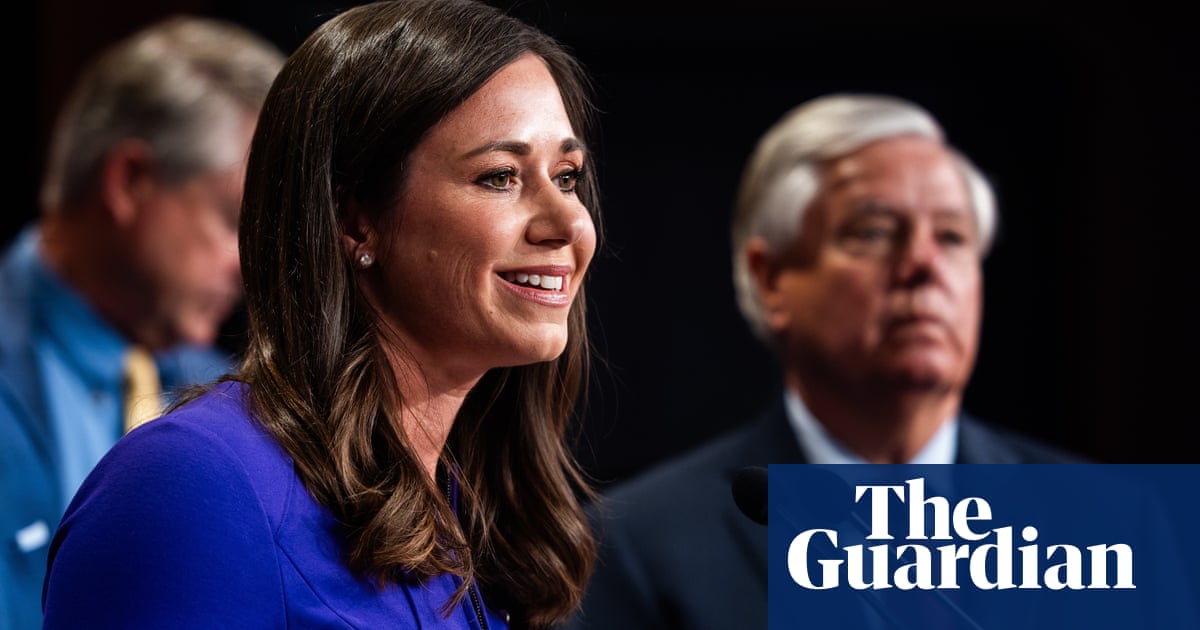
Katie Britt, the Republican US senator from Alabama best known for delivering a widely ridiculed State of the Union speech in March, marked the run-up to Mother’s Day on Sunday by introducing a bill to create a federal database to collect data on pregnant people.
The More Opportunities for Moms to Succeed (Moms) act proposes to establish an online government database called “pregnancy.gov” listing resources related to pregnancy, including information about adoption agencies and pregnancy care providers, except for those that provide abortion-related services.
The bill specifically forbids any entity that “performs, induces, refers for, or counsels in favor of abortions” from being listed in the database, which would in effect eliminate swaths of OB-GYN services and sexual health clinics across the country.
The website would direct users to enter their personal data and contact information, and although Britt’s communications director said the site would not collect data on pregnant people, page three of the bill states that users can “take an assessment through the website and provide consent to use the user’s contact information” which government officials may use “to conduct outreach via phone or email to follow up with users on additional resources that would be helpful for the users to review”.
Britt introduced the legislation on Thursday alongside two co-sponsors: fellow Republican senators Marco Rubio of Florida and Kevin Cramer of North Dakota.
In a statement, Britt said the bill was proof that “you can absolutely be pro-life, pro-woman, and pro-family at the same time”, adding that the legislation “advances a comprehensive culture of life” for mothers and children to “live their American Dreams”.
Critics have noted that the database of “pregnancy support centers” would provide misleading information in an effort to dissuade women from seeking abortions. Axios noted that the bill would also provide grants to anti-abortion non-profit organizations.
The state of Alabama, which Britt represents, already has one of the strictest abortion bans in the country. After the US supreme court eliminated federal abortion rights by overturning Roe v Wade in 2022, the state banned abortion except in cases where there is a serious health risk to the mother.
Britt’s party is in the minority in the US Senate and has only a slim majority in the House. Her bill would need to be approved in both chambers and then be signed by Democratic president Joe Biden to become law, giving her proposal virtually no chance of making meaningful progress in the legislative process as-is.
The speech Britt gave to rebut Biden’s State of the Union was panned by both parties after she invoked a story about child rape that she implied had resulted from the president’s handling of immigration at the US’s southern border. The abuse actually occurred years earlier in Mexico while a Republican was president, George W Bush.
Britt’s delivery – which oscillated between smiling and sounding as if she were on the verge of tears – was also a target of ridicule, though she defended her performance.
Switzerland wins Eurovision song contest after controversial grand final | Eurovision 2024

Switzerland has won the 68th Eurovision song contest, bringing to an end a fraught and at times tumultuous competition overshadowed by a row over Israel’s inclusion and the disqualification of the Dutch contestant just hours before the start of the grand final.
Swiss singer Nemo, who defines as non-binary, had entered the night as the bookmakers’ third favourite, but saw off frontrunners Croatia and Israel with an enthusiastic performance of their song The Code.
The operatic, drum’n’bass-propelled offering was the runaway winner in the jury vote, which makes up half of the overall score.
The musical performances risked becoming a footnote at the world’s largest live music event, after Dutch contestant Joost Klein was disqualified from the grand final over what the organisers described as an “incident” involving a female member of the production crew.
The Dutch broadcaster who sent Klein to the competition said it was “shocked” by the “disproportionate” decision, and declined to hand out the points of its jury at the end of the show.
The suspension heightened an already politically charged atmosphere, since Klein had appeared to vent his disagreement with Israel’s presence at a press conference on Thursday, vocally backing a journalist who had asked Israel’s contestant, Eden Golan, if she thought her presence might endanger the other acts and the attending fans.
Israel had been cleared to compete by the European Broadcasting Union (EBU) in March, after changing some of the lyrics to Golan’s power ballad Hurricane, a song about the traumatic experience of Hamas’s massacre on 7 October, originally entitled October Rain.
But the question of whether Israel should be allowed to compete or not while engaged in a military conflict in Gaza continued to dominate the run-up to the five-day kitsch extravaganza in the Swedish city of Malmö, with pro-Palestine activists unsuccessfully urging participating artists to join their boycott.
At a large demonstration in Malmö city centre on Saturday, several thousand protesters with Palestinian flags proclaimed their view that Israel should not have been allowed to compete in the first place, citing Russia’s exclusion since 2022 as a precedent.
Some protesters later moved on to the concert venue south of the city centre, shouting “Shame on you” at fans entering the arena. About 30 people were detained by police.
Inside the arena, the boos were mostly drowned out by cheers as Golan took to the stage.
Eurovision’s organisers dismissed rumours that the incident relating to Klein’s suspension had involved any other performers or delegation members, or even an altercation with the Israeli delegation.
“Swedish police have investigated a complaint made by a female member of the production crew after an incident following his [Klein’s] performance in Thursday night’s semi-final,” they said, reiterating “a zero-tolerance policy towards inappropriate behaviour at our event”.
In a statement, the Dutch broadcaster Avrotros said it was “shocked” by the “disproportionate” decision, saying the singer and rapper had merely made a “threatening move” towards a camerawoman but not touched her.
“Against the clearly made agreement, Joost was filmed when he had just gotten off stage and had to rush to the green room. At that moment, Joost repeatedly indicated that he did not want to be filmed. This wasn’t respected.”
According to the broadcaster, it offered “several solutions” to the EBU, which decided to disqualify Klein anyway. Martin Österdahl, Eurovision’s executive director, drew loud booing from the audience whenever he appeared on the screen during the show.
While rumours about the reasons behind Klein’s suspension ricocheted around the dressing rooms at Malmö Arena, the mood turned febrile. Ireland’s entry, a non-binary singer called Bambie Thug, failed to show up at the final dress rehearsal, fuelling rumours of their pulling out of the event.
In a statement, they later said their absence was over a separate disagreement with EBU, relating to the conduct of Israel’s public broadcaster, Kan, during the first semi-final.
The French performer, Slimane, interrupted the a cappella section of his song Mon Amour during the dress rehearsal to give a speech about “love and peace”.
In Norway, the country’s ex-contestant Alessandra Mele withdrew from her role as the spokesperson for delivering the jury points, over what she called the “genocide” in the Middle East.
At an event marred by political divisions, the Swiss entry offered a comforting rallying point. Singer Nemo Mettler follows in the footsteps of previous queer, transgender or drag contestants who were launched into the world at Eurovision, from Israel’s Dana International in 1998 to Austria’s Conchita Wurst in 2014.
Their song The Code was high-drama, but the stage show was effective for its simplicity, with the artist acrobatically balancing on a spinning platform.
It was one of several entries that defied Eurovision’s reputation as a showcase for the blandest of eurodance mush.
Croatia’s Baby Lasagna, real name Marko Purišić, had not just been the bookkeepers’ but a fan favourite with Rim Tim Tagi Dim, a song that sounded as if Jon Bon Jovi had secured Rammstein as a backing band; Italy’s Angelina Mango reminded the continent of her country’s proud song tradition with a forceful steelpan number on the unlikely theme of boredom.
Britain’s entry, Olly Alexander, came 18th with his song Dizzy, having received zero points in the audience vote.
Klein, a 26-year-old former YouTuber from Friesland, had long been tipped to make an impression at the song contest – just not like this. With lyrics in Dutch, German, Italian and English, and a video that closes on an image of a “European house” in flames, his song Europapa would have also been the first Eurovision song about the European Union since Toto Cotugno’s Insieme 92, which references the Maastricht treaty that was signed that year.
At the pro-Palestine rally in the city centre on Saturday afternoon, one participant waved a “Twelve points go to Joost Klein” placard. Politics and pop had became intertwined in ways that were difficult to untangle.
The moment I knew: I was late for our date â but he waited for me in the cold winter night, under a halo of lights | Relationships
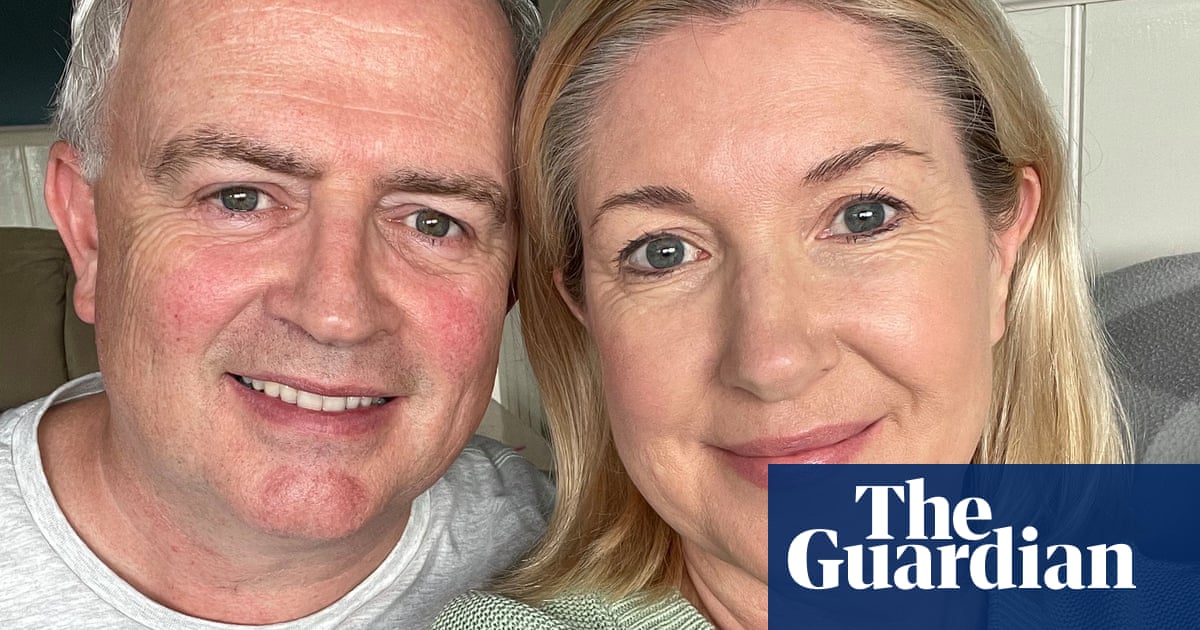
The odds that Mike and I would ever meet were low. We both grew up in Perth â the only problem being he was in Perth, Scotland, and I was in Perth, Western Australia. We then managed to find ourselves living in the same place (Melbourne) but on different sides of the city an hourâs drive apart.
It was 2014, weâd both been divorced for about five years and neither of us was having much luck with internet dating. It didnât help that my online profile was set to only show matches who lived within a 5km radius of my house. So while I really wanted to find love, I apparently wasnât willing to look further than walking distance from my front door. The algorithm very sensibly ignored me and matched me with Mike. I was intrigued by his profile; his heading was: âLooking for a woman who can make me laugh.â In my experience, men usually want to be the funny ones, the centre of attention. I thought, thatâs me, I can do that.
Mike was late for our first date, so I thought Iâd been stood up (it turns out he just didnât know how to find his way to Port Melbourne), but he eventually ran into the pub with a big smile and tripped over some low furniture. He was immediately likable, talking up a storm, very funny and witty, and at one stage squeezed my knee, not in a sleazy way but just in a moment of sheer exuberance. It turned out we both loved the same dark comedy show, The League of Gentlemen, and we could practically recite it scene by scene. Iâd never even met anyone else who had seen it. When I got home that night, I told my teenage daughter, and she said: âMum, you have to marry this man.â I thought, well, heâs funny and I made him laugh, letâs see where this goes.
On our second date, it was my turn to be late. Iâd completely misjudged how long a tram takes to go down Collins Street on a Saturday night. It was a dark, bitterly cold June night with an icy wind and I was dressed to impress, not for the weather. A frantically on-time person, as the tram moved at a glacial pace I ground my teeth until they were ready to shear off like icebergs. The time for us to eat before the movie was tight and here I was running over half an hour late. Would he even wait?
It was dawning on me that this was the first time Iâd been so anxious to impress a man in a very long time. I had to dash up a slippery crowded laneway in heels to the restaurant. Iâd assumed heâd just be sitting inside in the warmth, like any sensible person would, but there he was, standing in the dark waiting for me, dressed in a silvery suit with a halo of orange lights behind him. I wish Iâd photographed him; the whole scene looked like something out of a movie. I knew with absolute certainty at that moment that we would be together, that this wasnât just dating any more â here was the next stage of my life.
Three years later, in 2017, Mike surprised me with a romantic proposal at Glenfinnan in Scotland. True to form with us, even that had its funny side. There he was handing me an emerald ring on the shores of Loch Shiel, while over his shoulder I could see a poor hapless man in a yellow waterproof jacket walking towards us, only for it to dawn on him what was going on, get a panicked look on his face and make a sharp 90-degree turn to pretend he was interested in admiring the low scrubby bushes rather than the magnificent sweeping view of the water heâd actually come to see.
When I think back to that second date, everything about Mike was there from the beginning â he was so funny but also down to earth, solid, reliable and caring. I knew the moment I saw him in the laneway that this was a man who would leave the comfort of a warm room to come outside to wait for me in the dark and the cold, just so I knew where to find him.
Share your experience
Do you have a romantic realisation you’d like to share? From quiet domestic scenes to dramatic revelations, Guardian Australia wants to hear about the moment you knew you were in love.
Your responses, which can be anonymous, are secure as the form is encrypted and only the Guardian has access to your contributions. We will only use the data you provide us for the purpose of the feature and we will delete any personal data when we no longer require it for this purpose. For true anonymity please use our SecureDrop service instead.
Illinois man charged with hate crime for allegedly shooting next-door neighbor | Illinois

An Illinois man is facing accusations of a hate crime after he allegedly shot his next-door neighbor while hurling racist slurs at her sons, who are Black.
Prosecutors charged John Shadbar, 70, with nine charges, including attempted first-degree murder, aggravated battery, unlawful use of a weapon and a hate crime. Shadbar is being held in jail without bond after authorities said he had harassed his neighbor and her sons for years.
Investigators allege that Shadbar shot his neighbor, Melissa Robertson, 45, in the back yard of her home in Lockport Township, Illinois, a suburb outside Chicago. Robertson was taken to the hospital in critical condition, and was still recovering from her injuries.
Robertson’s family said she had reported to the Will county sheriff’s office multiple times that Shadbar had been harassing her family, shooting blanks and fireworks from his back yard and using racist slurs. Robertson, who is white, has two sons who are Black.
On 7 May, Robertson was outside with a friend and two children, including Robertson’s eight-year-old son, when Shadbar started revving his motorcycle engine, according to court documents seen by ABC News. Robertson blew an air horn in his direction, prompting him to yell “There’s gonna be dead [N-word] today” and throw a bottle over the fence.
The friend took the two children inside while Robertson walked toward Shadbar, thinking he was shooting blanks from a gun. Shadbar ultimately shot Robertson twice, in her chest and stomach, police said.
After the shooting, Shadbar barricaded himself inside his home, coming out after speaking with a crisis negotiator with the sheriff’s office.
“While speaking to the crisis negotiator, Shadbar made several incriminating statements,” the sheriff’s office said in a Facebook post about the incident.
With a search warrant, officers found five guns in Shadbar’s home, including some that were hidden in the walls. Shadbar’s gun-ownership rights had been revoked after he was arrested for a felony in 1979.
On Facebook, the sheriff’s office said that over the last year, it had “responded to a few calls to the victim’s home that were minor, non-related issues and were resolved on scene”. One call had reported that Shadbar was acting agitated and yelling at Robertson and her children. A second call was about Shadbar shooting fireworks and possibly a gun over Robertson’s fence.
“The victim states that she had ongoing issues with Shadbar. Deputies spoke with Shadbar, conducted an initial investigation, and due to lack of evidence no arrest was made at the time,” the sheriff’s office wrote.
Mikeal Johnson, Robertson’s stepson, said that his mother had surmised such an attack would eventually occur.
“She’s been telling me something like this was bound to happen because the cops won’t do anything – they can’t do anything,” Johnson told CBS News.
Jeanne Beyer, Robertson’s aunt, told the news outlet that “nothing was ever done”, noting that Shadbar didn’t have a firearm owners identification (FOID) card.
“I don’t care if he was shooting blanks – if he’s in his front yard waving a gun and doesn’t have a FOID card,” Beyer said. “I mean, I have a FOID card. I can’t go stand in my front yard and wave my gun around without some consequences.”
Talking to NBC News, Johnson recalled Shadbar calling “me the N-word straight to my face” and coming out of his house with a gun.
“It’s disheartening that it takes something like this to finally be heard,” Johnson said. “I don’t want anyone else of color, people of color, feeling like this, like they don’t deserve to be where they are because they’re Black and in the wrong neighborhood, so to be speak. I wish we could all be treated equally.”
âExplosiveâ secret list of abusers set to upstage womenâs big week at Cannes film festival | Cannes film festival
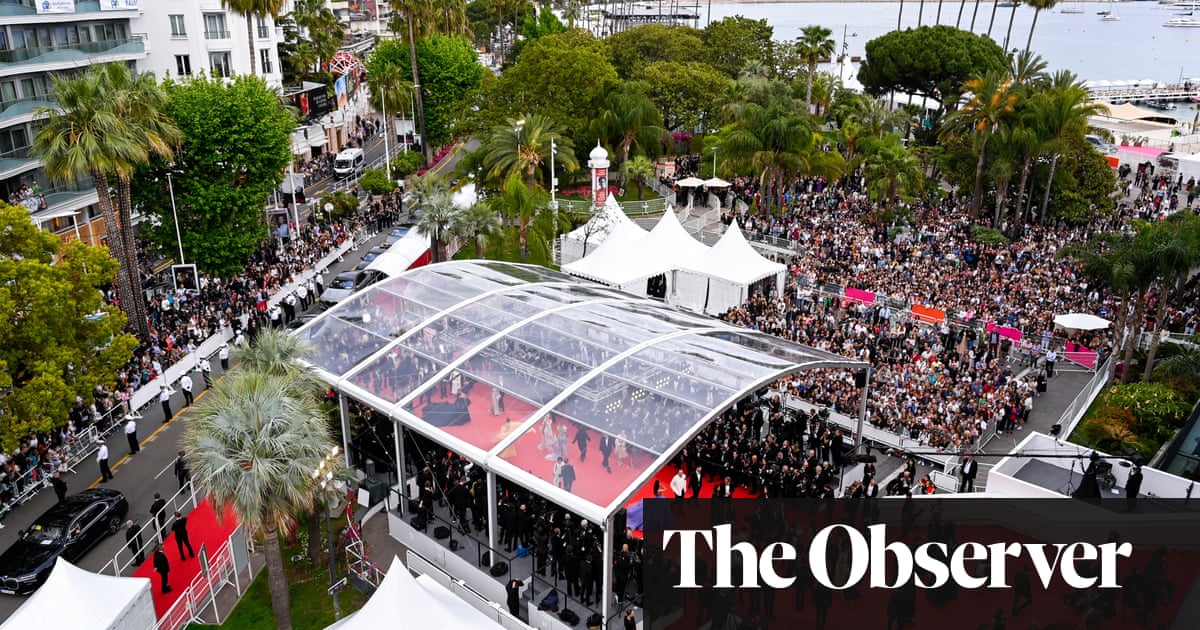
For good and bad reasons, on and off the red carpet, the spotlight is trained on women in the run-up to the Cannes film festival this week. As the cream of female film talent, including Hollywoodâs Meryl Streep and Britainâs Andrea Arnold, prepare to receive significant career awards, a dark cloud is threatening. It is expected that new allegations of the abuse of women in the European entertainment industry will be made public, which may overshadow the sparkle of a feminist Croisette.
Streepâs screen achievements will be celebrated with an honorary Palme dâOr at the opening ceremony, while a day later Arnold, the acclaimed British film director, will receive the prestigious Carosse dâOr from the French directorâs guild. And on Sunday another influential British film personality will be saluted when diversity champion Dame Donna Langley, the chairman and chief content officer at NBCUniversal, is to be honoured with the Women in Motion Award at a lavish dinner. All this comes in a year that also sees the American director Greta Gerwig, best known for last summerâs Barbie, presiding over a jury that features the campaigning stars Eva Green and Lily Gladstone. But the story of the 77th festival will not be all positive for women.
In the run-up to the annual gathering on the Côte dâAzur, rumours have been widespread in France of the existence of a secret list of 10 men in the industry, including leading actors and directors, who have been abusive to women. The names, described as âexplosiveâ, are believed to have been sent anonymously to the National Centre for Cinema in Paris, along with other leading film finance companies in France.
According to reports in Le Figaro and the satirical magazine, Le Canard enchaîné, festival organisers have set up a crisis management team to respond to the accusations. Films might have to be dropped from the screening timetable if they involve implicated names.
The impending revelations may prove an apt curtain-raiser for the Wednesday premiere of a short French film, Moi Aussi, about abuse in the industry. The film, which was added to the festivalâs Un Certain Regard programme at the last minute, is predicted to prove just as incendiary as the list, owing to its emotive content.
Made by actor Judith Godrèche, dubbed the âambassador of #MeTooâ in France, it draws on the words of many female contributors and takes the form of a choral piece, uniting different personal accounts. âSuddenly, before me was a crowd of victims, a reality that also represented France, so many stories from all social backgrounds and generations,â Godrèche has explained. âThen the question was, what I was going to do with them? What do you do when youâre overwhelmed by what you hear, by the sheer volume of testimonies?â
The 52-year-old actor first shook up French cinema in February when she accused the directors Jacques Doillon and Benoît Jacquot of having raped her in the 1980s when she was a teenager. Jacquot, 77, Godrèche said, had a relationship with her when she was under the age of consent. He denies committing any offences and has said that he was âunder her spellâ. She claims Doillon, 80, forced her to take part in a gratuitous sex scene on his 1989 film La Fille de 15 ans (The 15-year-old Girl). He says she agreed to take part in the scene, in which he also acted, and he denies rape or assault. Godrèche followed up her accusations a month later with a speech at Franceâs high-profile Cesar awards in which she claimed the film industry had been a cover for exploiting underaged actors.
The effect of new abuse allegations and all the honours being heaped on influential women will certainly mean the opening of the 2024 festival is in strong contrast to last year. Last May, demonstrators on the Croisette opposed Johnny Deppâs appearance in the opening film, Jeanne du Barry. They were angry about recent abuse allegations against him involving his ex-wife Amber Heard that led to his defeat in a British libel trial, although a month later he won a similar libel trial in an American court.
A more progressive tone should be set by Streepâs opening honour, made in recognition of âcountless masterpiecesâ over 50 years of cinema. âTo stand in the shadow of those who have previously been honoured is humbling and thrilling in equal part,â said Streep on hearing of the award.
London-born Langley, a âtrailblazingâ studio chief, is also being rewarded next weekend for fostering âa more inclusive industryâ over two decades with films that âprovide a platform for womenâ. Away from film sets, Langley has also campaigned as a board member of Vital Voices and is a founder of the Hollywood Reporterâs Women in Film mentorship programme. Previous winners of the Women In Motion award include Jane Fonda, Salma Hayek, Viola Davis and last year Michelle Yeoh.
Arnold, whose new film, Bird, is showing in the main competition this year, will receive her award after a Wednesday screening of her 2006 film Red Road. Set in Glasgow, it tells of a false accusation of rape made vengefully by a female CCTV operator.
Jury-member Green is one of the more prominent actors to have accused Harvey Weinstein of making inappropriate advances. In 2017 the actor said she had to push away the disgraced producer during a business meeting in Paris. âI got away without it going further, but the experience left me shocked and disgusted,â she said.
The reaction to the #MeToo movement in France has been slower and more nuanced than in America. The legendary actor Catherine Deneuve was among those to initially play down the importance of prosecuting the bad behaviour of men, defending their so-called âright to pesterâ. But last week French legislators agreed to a government inquiry into sexual and gender-based violence across the countryâs performing arts and fashion sectors. And in the autumn, French actor Gérard Depardieu, stands trial on charges of sexually assaulting two women on the set of The Green Shutters. He faces rape charges in another case and is under investigation over allegations of assault. He denies all charges.
Matthew Zajac: âI set out to write about my fatherâs life but discovered his war stories were all liesâ | Second world war

It was some years after my dad died that I discovered he was a liar. I loved him enormously. But he was a liar. I grew up in Inverness where my father Mateusz was a well-liked tailor. He was also a refugee with an East European accent who had fled his village in south-east Poland during the second world war.
Dad had always been a bit vague about his past but I figured that, like many of his generation, he didnât like talking about the war. It was only when I went to his home village in 2003, now in western Ukraine, that I discovered the stories my father told us about his early years were just that, stories. He told lies about his religion, his family and what he did during the war: they just tumbled out, one after the other.
Fifteen years earlier, in spring 1988, I sat down with dad and a cassette recorder in the workshop heâd set up in my old bedroom. He was 69 and semi-retired. I was 29 and visiting from London, where I was making my way as an actor. Dad had sold his shop in Inverness a couple of years earlier and my parents had bought their council house in Dalneigh, the 1950s estate where I grew up.
I had an idea I might want to write about dad in the future, though I didnât know what form it might take. Twenty years later, I gave the first performance of my one-man show, The Tailor of Inverness, telling the story of how I found out who my father really was and the secrets that he had kept from his Scottish family for decades.
Although he hardly spoke of the war, dad talked even less of his youth in south-east Poland, or western Ukraine as itâs been since 1945. As a boy in the 1960s, Iâd get the occasional inkling when a particular sequence in the documentary series, All Our Yesterdays, would reach into his memory bank. He said nothing as we sat on the settee watching the telly, but the welling up in his eyes revealed something else. But what was it? Normally, he looked forward, energetically living in the present. He was an upbeat, ebullient man, adapting successfully as a master tailor and popular small businessman in the Highlands.
Dad died suddenly, four years after our taped conversations, in 1992. A few months earlier, his social integration was crowned when he became master of his masonic lodge in Inverness. My wife Virginia and I had driven him and mum to Poland in 1990 to visit his brother Adam in Silesia. The Soviet Union collapsed the following year and Ukraine gained its independence. I had been thinking of taking him to his birthplace. That thought was now redundant. I was devastated. He was a great dad.
Six years later, I decided to do something with the tapes. He was in the room again and I was transfixed. I transcribed, and as I listened, my curiosity was piqued by several moments of uncertainty, a lack of clarity about a date or a place. His childhood and teenage memories told a vivid story of village life in Galicia. The problems related to his wartime journey. He told me how, as a young Polish soldier, he was captured by the Soviets in September 1939 as they crushed Poland in league with the Nazis. He was transported to do forced labour on a collective farm in Uzbekistan but escaped in 1941.
In an epic journey overland through the Middle East, he made it to Egypt and with other Polish soldiers joined Montgomeryâs 8th Army. They fought in North Africa and took part in the invasion of Sicily in 1943 before advancing up the Italian boot. They distinguished themselves at Monte Cassino, the greatest Polish victory of the war, 1,000 miles from home. When Germany surrendered, dad was in Ancona on the Adriatic coast.
He ended up in a Polish unit of the British army in Italy a month after the war ended. Given the choice of return to Poland or resettlement in the UK, he chose the latter, like most Poles in his position. As the communist takeover became clear, he knew a return would result in imprisonment in the gulag, or worse. He chose survival.
Through a cousin in New York, he discovered that his older brother Kazik was in Scotland. Dad joined him in Glasgow, where he met my mother and resumed the tailoring heâd learned in Galicia. They moved to Inverness in 1957. At least thatâs what he told me. And this is typical of the journey many thousands of Poles made. But not him.
In 2003, I decided to visit dadâs birthplace in Ukraine, something heâd never been able to do. The Soviets repeatedly refused him a visa, so he was never reunited with his mother, who died in 1971. Before the war, Pidhaitsi was a predominantly Jewish town where my father went to tailoring school: 90% of Galiciaâs tailors then were Jewish. Like all little towns in Galicia, Pidhaitsi had its own ghetto. The people in it were all murdered by the Nazis in 1943. Their mass graves are just outside town. Only a few kilometres further out is Hnilowody, my fatherâs village.
On that trip, I discovered that the granny I never met was Ukrainian, not Polish; that as borders fluctuated during the war, my father had been recruited into different armies, fighting for both the Wehrmacht and the Red Army. The one that he never joined was the Polish army.
For our family, the most stunning revelation was that he had married in 1940 and had a daughter, Irena, my half-sister. I traced her. Itâs hard to convey just how powerful, strange and moving meeting Irena and her mother was.
Once Iâd got over the shock that my father spent his life in Scotland claiming a story that wasnât his, it dawned on me that Iâd uncovered a more profound truth about the traumatic impact of war and migration. My father chose that story because he wanted to fit into his adopted homeland. It was more palatable than the messy reality of shifting frontlines, brutal ideological rivalry and an abandoned family. I hope that when people see my play they will look upon asylum seekers who arrive on our shores from war-torn places like Syria and Afghanistan with a bit more compassion because most have a similar story to tell.
âIrish cliche bingoâ: critics pan Obamasâ Netflix comedy drama Bodkin | Netflix
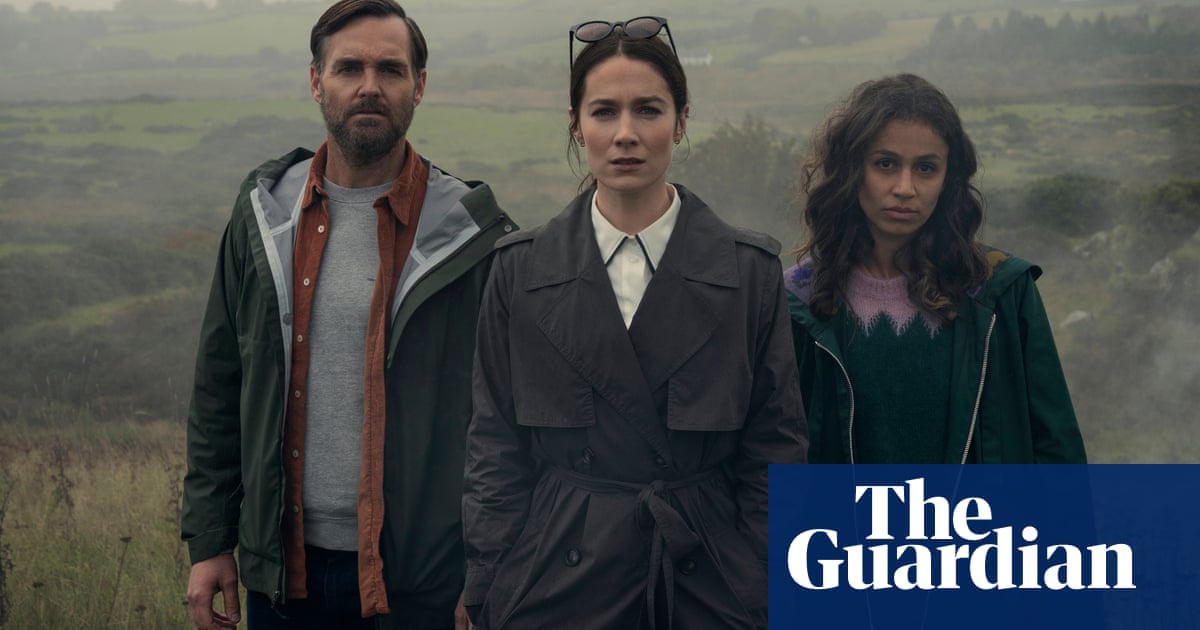
When Barack and Michelle Obama visited Ireland in 2011 they drank Guinness, visited the birthplace of the presidentâs great-great-great-grandfather and made pitch-perfect jokes and speeches. The reception was rapturous.
Their current foray into Irish culture is proving more divisive. The Obamas are not here in person but as executive producers of a comedy drama series, Bodkin, set in Ireland, which launched this week on Netflix. Reviews have been polarising.
âYet another entry in the worst genre ever â the Irish rural picaresque where booze flows, nuns scowl,â said the Irish Times. âA deeply annoying show that thinks it is critiquing cliches about Ireland when actively adding to the stockpile. Letâs ignore it and hope it goes away.â
It was an eviscerating verdict on the first foray into scripted television by the Obamasâ production company Higher Ground, which signed a deal with Netflix in 2018.
The seven-part series features American true-crime podcasters â and a rude, cantankerous Guardian reporter â who travel to the fictional Cork village of Bodkin to investigate ritualised folk horror killings. Starring Will Forte, Siobhán Cullen and Robyn Cara, its whimsical style has drawn comparisons to Only Murders in the Building.
The Irish Times credited the former first couple with good intentions. âIn keeping with the thoughtful and socially conscious Obama brand, it sets out to critique our obsession with true crime podcasts and to have fun with Americans and their misty-eyed vision of Ireland.â
But the show had recreated Father Ted without the jokes or self-awareness, it said. âIf the locals in Bodkin are gradually revealed to be putting on a sly act in front of the naive American, the series nonetheless plumbs the depths of diddly dee twaddle.â
The panning, albeit for a show he did not write, was a far cry from 2011 when Obama delighted audiences with a joke skewering American quests for Irish roots: âMy name is Barack OâBama and Iâve come home to Ireland to find my missing apostrophe.â
The Irish Independent review started with a warning. âWe know from bitter experience what the result can be when Netflix rubs up against rural Ireland: dross like Irish Wish [an Ireland-set romantic comedy]. At first sight, Bodkin looks like it might be about to plummet into the same dark pit of paddywhackery.â
A west Cork coastal town with a funny-sounding name populated by folksy eccentrics augured poorly, it said. âIf this isnât enough to set your Oirish bullshit-detecting antennae twitching, then the fact that the animated opening titles feature a pint of Guinness, a nun and a St Brigidâs Cross should be.â
The review then swerved. âBut wait â donât run away, because Bodkin is not what you might have feared. Itâs clever, funny and properly gripping stuff: a deliciously offbeat concoction of the (intentionally) silly and the sinister that delights in setting up more shamrock-laden cliches than you can shake a shillelagh at and then gleefully shredding them.â
Other reviews hovered in the middle. The Guardian gave it three out of five stars, saying it occasionally matched the fun of Only Murders in the Building. âThat it doesnât ever quite catch fire in the same way as that highly idiosyncratic show is unfortunate, if predictable, but not fatal to enjoyment.â
The Times lauded performances and said writer Jez Scharfâs script was fine and often witty but that little about the characters or plot rang true. âIt feels too â whatâs the word? â cartoonish, as if we were playing Irish cliche bingo. Everything is thrown into the mix and the resulting pie is uneven, with some parts tastier than others.â