âIn Europe, everyoneâs screaming kill, kill, killâ: Stellan SkarsgÃ¥rd on Sweden, âsillyâ Scandi noir and security | Film
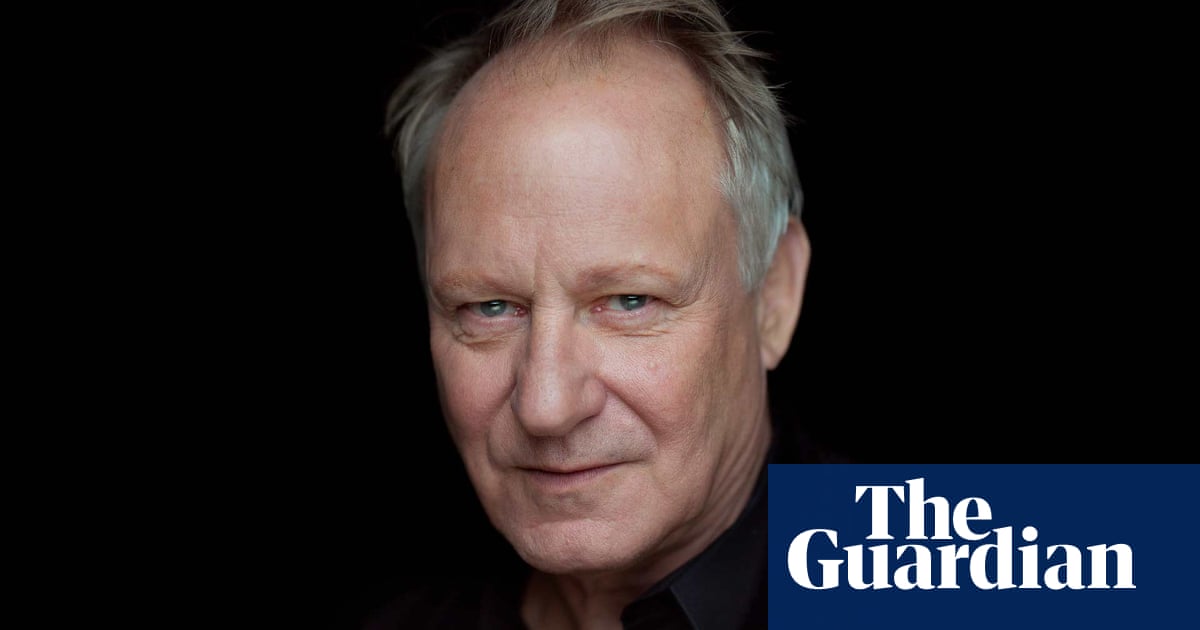
Stellan SkarsgÃ¥rd is speaking to me from his cabin, outside Stockholm, and why shouldnât he look relaxed and happy, in those clement, sun-dappled surrounds? But it is so disconcerting. His performance in What Remains, as a battle-scarred police officer, trying to keep hold of his family, his bearings and his scepticism in the face of a criminological modernity that puzzles him, joins a body of knotty work that UK audiences would probably date back to Breaking the Waves, Lars von Trierâs 1996 classic. His smallest facial gesture speaks fathomless emotion. I am a huge Mamma Mia! fan â in which he plays Bill Anderson â so I have seen SkarsgÃ¥rd smile, but even then, not all the time.
What Remains is based, loosely, on a famous case in Sweden: it was the 90s, and the so-called âretrieved memoryâ technique was huge, even though in the US, where it was developed, it had already been disallowed as reliable evidence. âAll psychologists in Sweden were using retrieved memory at the same time, a lot of men were put in jail for violating their children,â SkarsgÃ¥rd says. âItâs really the fabrication of memory. It was very optimistic, to think you can just open up the memory and look at it. Every divorce youâve been through, youâll know, the truth isnât exactly as everybody says.â
This came to a head in the 90s, with the case of Mads Lake, the long-term resident of a psychiatric hospital, who has definitely been abused as a child and has himself âcommitted offences against children, we donât know if heâs raped one, but itâs a terrible messâ, says SkarsgÃ¥rd. Told in austere but beautiful landscapes, bleak Formica interiors, freighted pauses and this small cast, chasing one another towards an impossible certainty, the film is exquisitely disorienting. A folie à deux between Mads and the psychologist Anna Rudebeck (played with quiet intensity by Andrea Riseborough) led Lake, Rudebeck and SkarsgÃ¥rdâs policeman, Soren Rank, to near certainty that Lake was, in fact, Swedenâs first serial killer.
Lake is played by SkarsgÃ¥rdâs son Gustaf, one of four acting sons including Alexander and Bill (Stellan has eight children in total). Gustaf shares the SkarsgÃ¥rd magnetism but is emphatically not playing this for charisma: greasy, furtive and confused, his distress comes powerfully off the screen.
âIâm full of happiness watching him work,â SkarsgÃ¥rd says of his son, âbecause heâs so good. I donât see him suffering, I know he enjoys it. Weâre actors, for fuckâs sake.â The family is very close: âThereâs a certain competition between my sons, but not in the sense that they donât appreciate each otherâs success or have any grudge against each other.â They all live within five minutes of each other in Stockholm, like Swedish arthouse Waltons. It wasnât deliberate, he says, raising so many actors. âI didnât care what they became when they grew up, they could do anything. But obviously they saw that I had fun doing the acting stuff, so they became actors. Theyâre all very different. I am amazed how different they can be from each other, having the same parents. Well, some of them have the same parents.â
What Remains was written by Everett-SkarsgÃ¥rd, and she and the director, Ran Huang, had Gustaf in mind before they cast Stellan. âI couldnât not be involved, because it was in my home. My wife was writing it and she was tearing her hair out all the time. I donât usually mix my private life with my professional life. You can get very tied up, and eventually it starts conflicts that you canât handle. But I couldnât say no to working with that dark material, and with Gustaf.â
If the case gripped Sweden in the 90s, it was partly because the country had never had a serial killer, which will come as news to fans of Scandi noir. The main thing I know about the land block, from its cultural exports, is how incredibly good, and experienced, its fictional detectives are, particularly at finding serial killers. âAnd we donât have one! We still havenât had a serial killer. So we donât know what it is,â SkarsgÃ¥rd says.
âThe Scandi noir thing is pretty silly, I must say,â he adds. âI did one of the first Scandi noir films, Insomnia â it didnât have that label at the time. Marketers, they want to label everything.â While he has done a number of crime stories, he says: âThis is only my second policeman. The first one was in River. I donât like police series, but Abi Morgan had written such a beautiful script, it was not about police work, it was about human beings. And I also said: I canât say the police lines. Youâve got to have someone else say them.â Wait, what? âYou know, âDownload the CCTVâ, âCheck his bank accountsâ, all that stuff. I canât say things like that without laughing.â
In real life, Sweden is a low-crime nation of peace lovers, or at least, it was. âIt is changing, thatâs the sad thing,â he says. âWe used to be seen as a very wealthy country with very happy people. And, of course, a neutral country. But now weâre a member of Nato, we have doubled our arms budget. Like all of Europe. Everybodyâs screaming to kill, kill, kill.â He continues: âEverybody is so excited now, by war. Theyâre showing the prime minister of Denmark and the prime minister of Sweden, and theyâre sitting in fighting planes, and theyâre showing off the latest submarine, and their pride in the Swedish rocket gun. Thereâs a pride in weapons that we were once ashamed of before.â
If this feels like a swerve, from the dark and contemplative What Remains, to Nato and the perils of the future, itâs not surprising to SkarsgÃ¥rd, for whom it is obvious that art should be âthe place for refugees, the dropouts, the insane people, the homosexuals. We have to defend our outsider values.â
That has been a constant thread in SkarsgÃ¥rdâs career, risk-taking and rebellion, which he ventriloquises through Von Trier, and Breaking the Waves. âI felt that Lars was a very radical man. He said, I know what films Iâm making now. Iâm making the films that havenât been made. I felt excited. It was dangerous and shocking in so many ways. And you didnât think you could make films like that any more. Or, ever. He is truly original, he canât do anything normal.â
But you wouldnât call SkarsgÃ¥rd an intellectual purist â thereâs plenty of Pirates of the Caribbean in his long career, as well as Marvel films and The Girl with the Dragon Tattoo â and he insists on the profundity of having a laugh, as was the case on Mamma Mia!. âAs soon as I gave up any ambition for my singing and dancing, I realised the story: the quality was not the story; the script was not the story; it was that you saw a lot of actors having fun together, and it was very contagious.â
âAs an actor,â SkarsgÃ¥rd says, âyouâre donât create your own art, youâre a reproductive artist, in a way. But I feel very zen about it. Iâve not been too pretentious about my arthouse films. I enjoy them, I think theyâre delicious. Iâm approaching my death now,â he says, cheerfully. âThereâs a limit to the number of roles Iâll get, limited time. I want to continue doing what Iâve done, making the things that havenât been made.â
Puffins, catfish and sea squirts: how to spot wildlife on the British coast | Environment
If you go down to the sea today, there’s a good chance you will find something you’ve never seen before. With more than 10,000 miles of coastline and a rich mix of habitats, the Great British seaside is the perfect place for wildlife encounters. Whether you fancy a spot of beachcombing, rock pooling, bird watching or fish following, there’s plenty to keep you busy. With a few simple pointers on where and how to look, there are hundreds of coastal species to find. Grab a pair of wellies or a wetsuit and dive mask and the British coast is all yours to explore.
Tropical lookalikes
Go for a snorkel around shallow rocks and seaweeds and keep an eye out for colourful fish that would fit right in on a tropical coral reef. Corkwing wrasse (Symphodus melops) males are usually the flashiest of their species. They can grow up to 25cm long and have gleaming green and red stripes scribbled across their faces. Their bodies are splotched in blue, red and orange.
You might spot a male picking up chunks of seaweed in his mouth and carrying them off to his expertly crafted nest. Corkwing wrasse select up to 10 different seaweed types to decorate different parts of their nests including soft seaweeds for females to lay their eggs on and encrusted pink seaweeds around the edges that act like living cement and keep growing, knitting the nest structure together.
Females are less flamboyant, although on their underside they have an electric-blue egg-laying tube. A few small males adopt a different life to the nest makers and pretend to be females with muted colours. They sneak up to nests and fertilise clutches of eggs without getting chased off by the guardian male.
Rock stars
When the tide is at its lowest point, especially during spring tides around the new and full moon, you’ll find sea creatures that can’t survive further up the shore. Peer under rocks and in damp nooks and you might see cushion stars (Asterina gibbosa), chubby little cousins of the bigger, leggier starfish that live further offshore. Powder pink and orange-coloured cushion stars are often fingernail size but they can grow up to 5cm across. They’re common all along the British coast (though you’re unlikely to spot one in the east between Lincolnshire and Hampshire).
Also, on the underside of rocks at low tide, look out for what look like constellations of tiny golden stars. These are star ascidians (Botryllus schloserri), colonies of little animals known as sea squirts. Between three and 12 individuals make a single star-shaped pattern. Sea squirts start life as minute larvae that swim through the water. When they find a rock to settle onto, they digest their simple brain and nerve cord and spend the rest of their lives sitting still filtering water through their bodies.
Once you’ve finished looking, always carefully put the rocks back the way you found them.
Cuttlefish and catsharks
High up on the shore, beyond the reach of the water, you will find traces of animal life the sea has left behind. Bone white objects like miniature styrofoam surfboards are the internal shells of common cuttlefish (Sepia officinalis), relatives of squid and octopuses. Cuttlefish live all around the British Isles as deep as 200 metres, and large numbers gather along England’s south coast.
You might encounter living cuttlefish underwater while diving and snorkelling. Look for them in seaweed gardens and around rocky reefs. They can grow as long as your arm and have a skirt-like fin that flutters all the way around their oval body. Their big eyes have W-shaped pupils. Their skin can swiftly change colour and texture; one minute they’re brown and bumpy matching the seabed, the next they’re smooth and pale with black zebra stripes.
One way to distinguish cuttlefish from octopuses is to count their appendages: octopuses have eight arms with suckers all the way along, meanwhile cuttlefish have eight arms plus two tentacles that shoot out and grab prey with suckers just at the end.
Other strandline objects to spot are the leathery egg cases, also known as mermaid’s purses, laid by sharks and skates. Small-spotted catsharks (Scyliorhinus canicula) lay small egg cases, 5-7cm long, with curly tendrils in each corner that help fix them to seaweed on the seabed. After six to nine months, a miniature, fully formed cat shark wriggles out and swims off. Divers have a good chance of encountering adult catsharks resting on the seabed. Their slender, brown-speckled bodies grow to about a metre long, and they have oval-shaped eyes, like a cat.
Jewel-like shells
While snorkeling or exploring the shore at very low tides, look for little jewel-like shells, with shining turquoise stripes, sitting on the rubbery blades of kelp. Blue-rayed limpets (Patella pellucida) are seaweed-eating sea snails and they graze little dimples in the kelp to create space to nestle in.
Their glowing stripes selectively reflect blue wavelengths of sunlight, thanks to the intricate nanostructure of the shell’s interior. Material scientists are looking into recreating this effect to make transparent display screens. Blue-rayed limpets don’t live along much of the east coast of England, but you can find them all around the west and northern coasts of Great Britain and Ireland.
Atlantic puffin
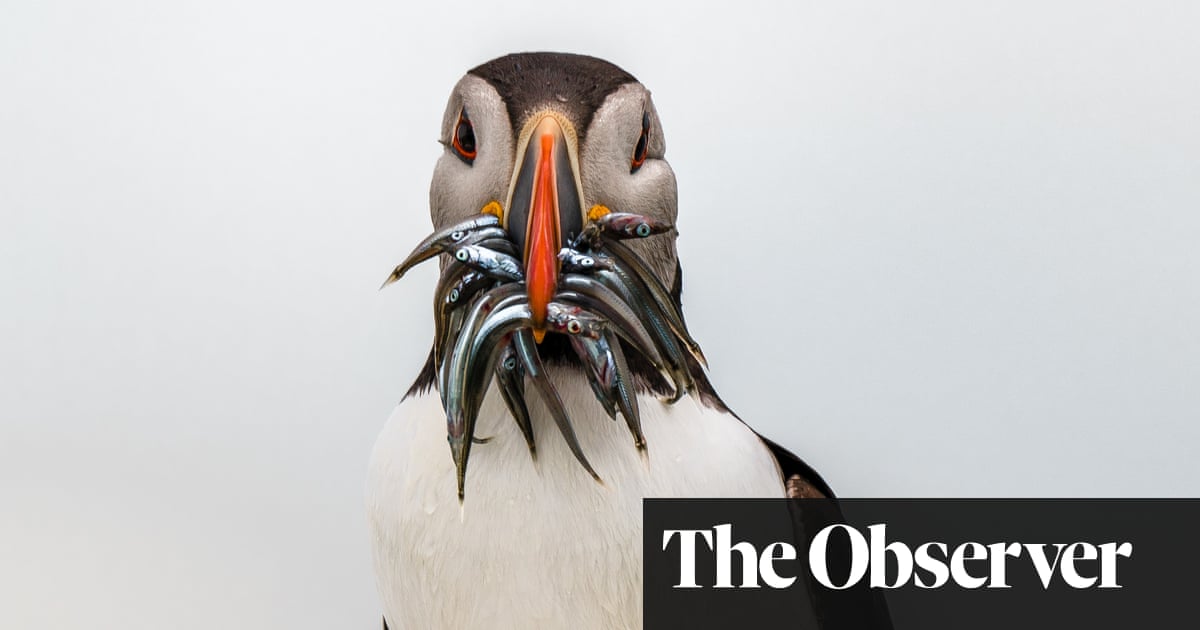
There’s no mistaking a puffin, with its black and white body, rainbow-coloured, parrot-like beak and stubby wings which it uses both to fly and swim while hunting for fish, using its feet as a rudder. It can dive to 40m, hold its breath for a minute and cram dozens of sandeels in its beak at a time.
Puffins spend the wintertime far out at sea. Then, in spring and summer, around four million pairs fly to the UK to breed. Look out for puffins dashing in and out of their burrows on cliffs around Scotland, northern and south-west England and Wales.
10%
Skomer Island off the Pembrokeshire coast is one of the best places to see puffins, with more than 40,000 counted each year. The seas around Skomer are well protected from overfishing and the island is free of predators, so puffins get plenty of food and seclusion to rear their chicks. Elsewhere, the seabirds are suffering because the climate crisis and overfishing are making it difficult for them to find enough food.
Bidenâs poor performance and Trumpâs lies: four key takeaways from the debate | US elections 2024
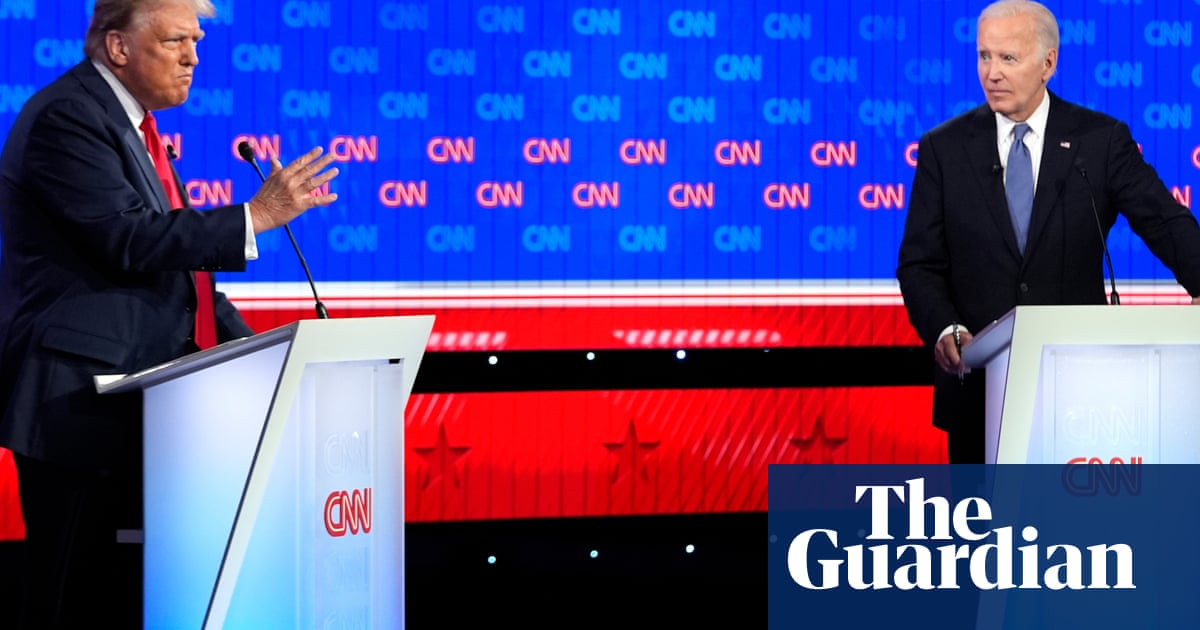
1. Biden performs poorly
The president joked about the rightwing conspiracies that he would take some kind of performance-enhancing drugs before the debate, posting a link to a can of water for sale on his campaign website called âDark Brandonâs Secret Sauceâ.
But his low-energy, muted and garbled performance didnât live up to expectations. And keep in mind: Biden challenged the former president to the debate, which looks like a strategic error in retrospect.
Voters regularly say they are concerned about Bidenâs age and fitness for office. This debate will not assuage their fears.
If someone were reading a transcript of Bidenâs remarks, some of his lines would sound smart and aggressive. But the delivery failed â and for a visual medium like TV, thatâs critical. He failed to sell his signature accomplishments, like his infrastructure plan.
From the start, Bidenâs voice was muffled. He trailed off. In one gaffe, attacking Trump on his tax cuts and the national debt, he confusingly ended his remarks with: âWe finally beat Medicare.â
Trump jumped on the moment: âHe did beat Medicare. He beat it to death, and heâs destroying Medicare.â
On an abortion question, which should be one of Bidenâs strongest assets for voters concerned about rolling back reproductive rights, Biden brought up girls killed by migrants â pivoting, for some reason, to one of his weakest areas.
He became more lively over the course of the evening, but not enough to change the narrative of how the debate went down optically. The evening will undoubtedly lead Democrats to debate whether Biden should somehow be replaced at the convention.
2. Trump lies endlessly
As expected for a politician so consistently factchecked, Trump repeatedly tried to sell falsehoods and half-truths to voters.
When questions were posed that would require tough answers, like one about the January 6 insurrection, he deflected and talked about something he could attack Biden on.
CNNâs moderators did not factcheck statements live. At times, when he avoided the question, they would reiterate it â sometimes successfully getting Trump to answer.
He falsely claimed Democrats want abortions up until and after birth. He said without evidence that Nancy Pelosi refused his offer for national guard troops on 6 January 2021 to respond to an insurrection he encouraged. He said his administration had the âbest environmental numbersâ, whatever that means.
And his promise that retribution would mark a second term in office surfaced too, in what seemed to be a veiled threat of prosecution: âHe could be a convicted felon as soon as he gets out of office. Joe could be a convicted felon with all of the things that heâs done. Heâs done horrible things.â
3. Different visions were starkly on display
The two men showed the distinctions of the two Americas in which they live.
Trump repeatedly talked about how the US had failed, how Biden was the worst president in the countryâs history and how the world views the country dismally now.
âJoe, our country is being destroyed. As you and I sit up here and waste a lot of time on this debate. This shouldnât be a debate. He is the worst president, he just said about me because I said it. But look, heâs the worst president in the history of our country. Heâs destroyed our country.â
Biden disagreed, offering an optimistic view of the US on the world stage.
âWeâre the most admired country in the world. Weâre the United States of America. Thereâs nothing beyond our capacity. We have the finest military in the history of the world, the finest in the history of the world. No one thinks weâre weak. No one wants to screw around with us, nobody.â
4. The adult film actor moment
Trumpâs convictions and varied court cases didnât come up in the debate until it was well underway, a missed opportunity from Biden to hammer on one of Trumpâs key liabilities.
When the issue finally surfaced, Biden hit at Trump for having sex with an adult film actor while his wife was pregnant, referring to Stormy Daniels and the hush-money trial that concluded in 34 felonies for Trump.
âYou have the morals of an alley cat,â Biden quipped at Trump.
Trump responded with a line that surely has not been uttered at presidential debates in decades past: âI didnât have sex with a porn star.â
Ukraine war briefing: Moscow considering downgrading relations with west over Ukraine involvement | Ukraine
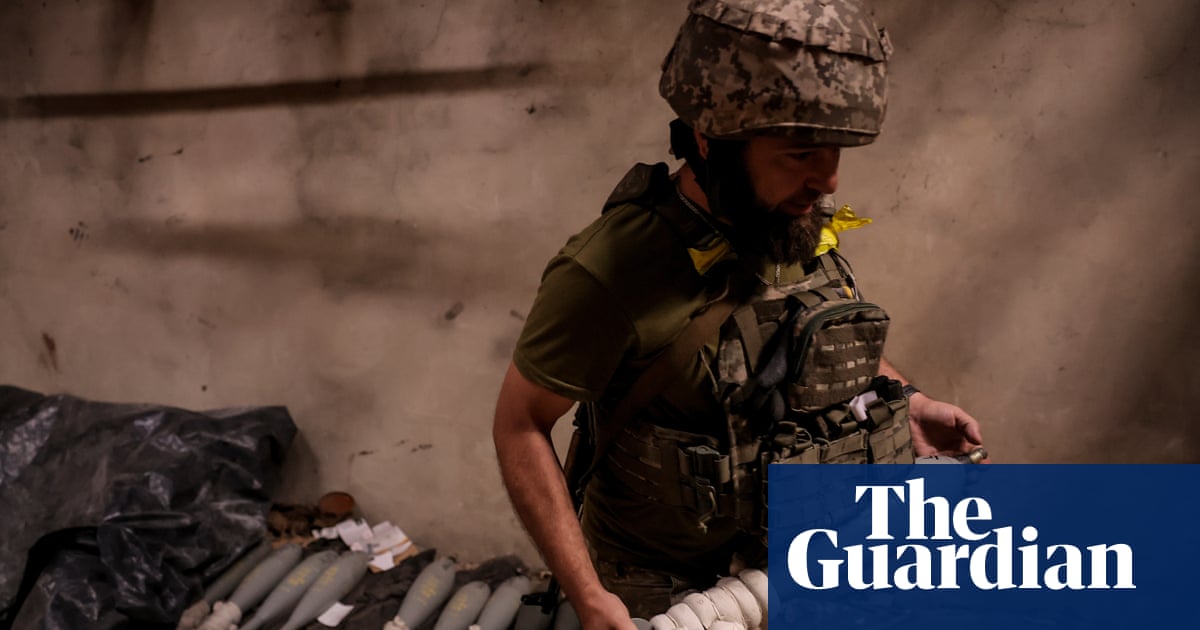
Russia is considering a possible downgrading of relations with the west due to the deeper involvement of the US and its allies in the Ukraine war, but no decision had yet been taken, the Kremlin said on Thursday. A downgrading of relations – or even breaking them off – would illustrate the gravity of the confrontation between Russia and the west over Ukraine after an escalation in tensions over the war in recent months. Relations were maintained even during the 1962 Cuban missile crisis, when the cold war is thought to have come closest to nuclear war.
Ukraine’s military said on Thursday its forces had forced Russian troops out of a district in the town of Chasiv Yar on the war’s eastern front seen as Moscow’s next target in its slow advance through the area. Nazar Voloshyn, a spokesperson for Ukraine’s southern group of forces, told the Ukrinform news agency that Russian forces had moved out of Chasiv Yar’s “Kanal” district along the Siverskyi Donets-Donbas canal that runs along the town’s eastern edge. However, a Russian report said Moscow’s forces had destroyed a communications tower near the town and made further headway. It was not possible to independently verify either report.
The Ukrainian president met the European Union’s 27 leaders in Brussels to sign a security pact, two days after his country began formal membership talks to join the bloc – a historic step that was unthinkable before Russia’s full-scale invasion in February 2022. Volodymyr Zelenskiy said the EU-Ukraine security agreement would “enshrine the commitment of all 27 member states to provide Ukraine with extensive support, regardless of any internal institutional changes”.
Zelenskiy also told EU leaders that Russia’s spring offensive in Kharkiv showed that international pressure on the Kremlin was “not enough”. “Thanks to the bravery of our people and the decisions of you, of our partners, we stopped this Russian offensive,” he said. “But this new Russian offensive proved that the existing pressure on Russia for the war is not enough.”
The French far-right National Rally (RN) will not allow Russia to absorb Ukraine if it comes to power in legislative elections, party leader Jordan Bardella said Thursday. “I will not let Russian imperialism absorb an allied state like Ukraine,” Bardella said in a televised debate, pledging both “support for Ukraine and avoiding an escalation with Russia”.
At the same time, RN’s former parliamentary leader Marine Le Pen said she expected the party to win an absolute majority in France’s general election, form a government and take over at least some defence and armed forces decision-making, including on Ukraine. Le Pen has previously maintained friendly relations with the Russian president, Vladimir Putin, and has argued for closer ties with Moscow.
The Nato chief, Jens Stoltenberg, said on Thursday the “resilient” military alliance could ride out any political changes in major powers ahead of crunch elections in the US and France. The high-stakes votes on either side of the Atlantic both feature hard-right candidates – Donald Trump and Le Pen – who have been historically hostile to the military alliance and known for warm relations with Russia, its chief adversary.
Ketanji Brown Jackson pens fiery dissent in abortion ruling: âFacilitating suffering of peopleâ | US supreme court

In a searing dissent Thursday, Justice Ketanji Brown Jackson slammed her fellow justicesâ decision to dismiss the case over whether a state can ban abortions to protect womenâs health, pointing out that the dismissal will drag out the case â and potentially endanger Americans.
âWill this court just have a do-over, rehearing and rehashing the same arguments we are considering now, just at a comparatively more convenient point in time?â Jackson asked in a dissent read from the bench, a move justices tend to only make when they feel particularly fired up.
âOr maybe we will keep punting on this issue altogether, allowing chaos to reign wherever lower courts enable states to flagrantly undercut federal law, facilitating the suffering of people in need of urgent medical treatment.â
The case deals with whether Idahoâs abortion ban, which only permits abortions in cases where a womanâs life is in danger, violates a federal law known as Emergency Medical Treatment and Labor Act (Emtala). That law, which dates back the 1980s, requires hospitals that receive federal dollars â which is virtually all of them â to stabilize the health of patients who show up at their emergency rooms in the midst of medical emergencies.
The Biden administration had sued Idaho, arguing that its abortion ban forced doctors to break federal law by leading them to withhold abortions until women were on the verge of death. The supreme court initially issued an order allowing Idahoâs abortion ban to take full effect but, in its Thursday dismissal of the case as âimprovidently grantedâ â indicating they should have never taken it on â the justices agreed to let Idaho doctors resume performing emergency abortions.
âWe cannot simply wind back the clock to how things were before the court injected itself into this matter. Our intervention has already distorted this litigation process,â Jackson said in her dissent. âWe permitted Idahoâs law to go into effect by staying the district courtâs injunction in the first place, then allowed this matter to sit on our merits docket for five months while we considered the question presented.â
Letting the Idaho case continue to play out will also impact the rest of the US, Jackson added. Although many states that ban abortion permit the procedure to protect womenâs health, a handful do have bans on the books that, like Idaho, only allow abortions to save a patientâs âlifeâ. These bans could conflict with Emtala, according to briefing in the supreme court case by the Biden administration.
Notably, Texas has also already sued the Biden administration over Emtala. The stateâs claim in that suit was that the landmark law protecting emergency abortion access was âan attempt to use federal law to transform every emergency room in the country into a walk-in abortion clinicâ. Courts have since sided with Texas, blocking Biden administration guidance about Emtala and emergency abortions from taking effect in Texas.
The dismissal in the Idaho case does not impact the Texas litigation. The Texas Emtala case could land in front of the supreme court as early as next term, Nancy Northup, the president of the Center for Reproductive Rights, told reporters in a call on Thursday.
A final decision in the case may not arrive until after the November elections. If Donald Trump wins the presidency, his administration could decide to shift its priorities, change the executive branchâs interpretation of Emtala and stop litigating the case, according to Nicole Huberfeld, a health law professor at Boston Universityâs School of Public Health. If that happens, Idahoâs abortion ban may end up remaining as is.
âAs someone who cares about access to care, this decision is just a temporary reprieve,â Huberfeld said. âItâs not the end of the line.â
Jackson effectively sided with the 6-3 vote to dismiss the case, in that she agreed with the move to let emergency abortions resume in Idaho but said she would not have dismissed it as improvidently granted. To the extent that Emtala is in conflict with Idahoâs ban, she wrote, the federal law trumps state law.
âThis months-long catastrophe was completely unnecessary,â Jackson said.
She continued: âThis court had a chance to bring clarity and certainty to this tragic situation and we have squandered it. And for as long as we refuse to declare what the law requires, pregnant patients in Idaho, Texas and elsewhere will be paying the price.â
Canadian man makes history after receiving zero election votes: âI am the true unity candidateâ | Canada

A Canadian man has made history by receiving zero votes in a contested federal election, after running as part of a protest over the lack of electoral reforms in the country.
âWhen I saw the result, I was like: âWell, I am the true unity candidate. Everyone agrees not to vote for me,ââ Félix-Antoine Hamel told CBC News.
Hamel was among 84 people who listed as a candidate in a recent by-election held in Toronto. He put his name forward as a candidate after he was approached by the Longest Ballot Committee, which works on electoral reform advocacy.
As a key campaign promise, Justin Trudeau promised that if his party won power, the 2015 federal election would be the last under the first-past-the-post system. After his government won a landslide majority, however, he abandoned the promise.
The Longest Ballot Committee says the current system skews power into the hands of parties wining a minority of the vote. In protest, the group successfully put 77 names on the Toronto ballot, bringing the total to 84 and slowing efforts count votes in Mondayâs closely-watched election. Scrutineers were forced to sift through paper ballots measuring a meter in length: the longest ever in Canadian history.
âThe unusual dimensions of the ballot itself meant that some steps took more time than normal,â an Elections Canada spokesperson said in a statement. âDelays compounded across several steps over the course of the night.â
When the results had been finalized, six other candidates received two votes each, but Hamel was the candidate one not to receive a single vote.
Hamel lives hundreds of miles away from the electoral district, in Montreal, and because he lives outside Toronto, he couldnât vote for himself.
Previous federal elections have seen zero-vote results, but in those cases, the candidates were running unopposed and were thus acclaimed as winners. Hamelâs feat marks the first time someone has won zero votes â and lost.
âIâm one of the last people that would be expected to make Canadian history in any way,â he said.
BrewDog sacks Asian woman after reaction to EDL members meeting in bar | BrewDog
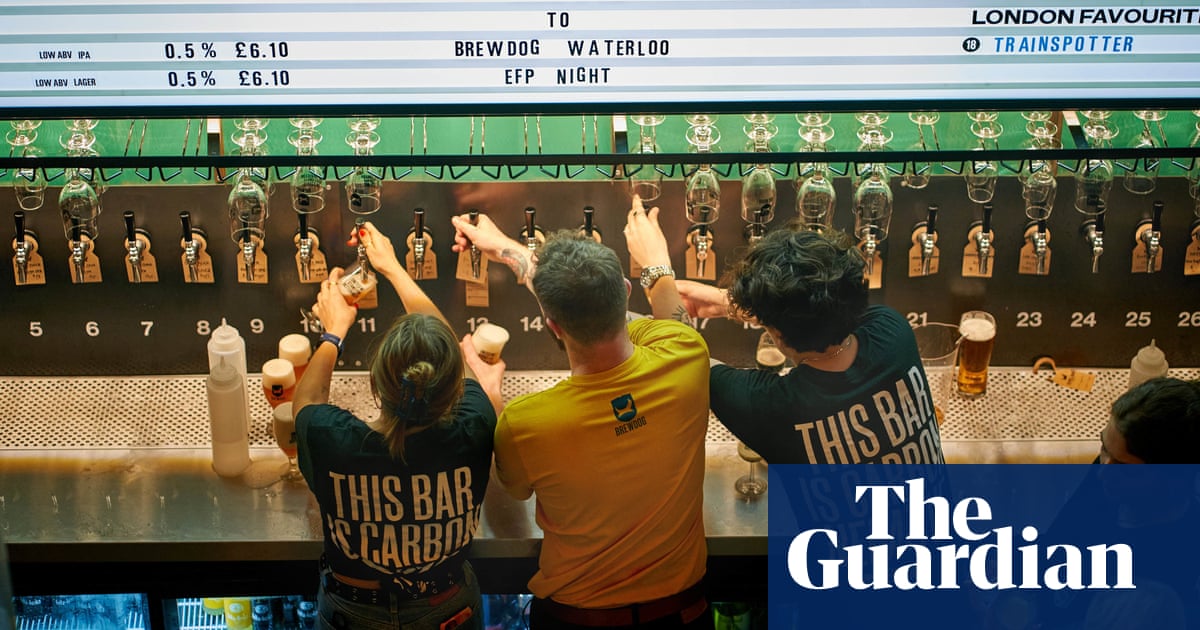
BrewDog has been accused of sacking an Asian woman after she voiced her distress when members of the far-right English Defence League met in the London bar where she worked.
The former staff member said members of the EDL had gathered unchallenged at the “punk” brewer’s flagship bar in Waterloo, ahead of a rally to mark St George’s Day on 23 April.
Police went on to arrest 10 people at the event, after groups of men tried to break through cordons in an areas of Whitehall, while glass bottles were also thrown.
The former BrewDog staff member said she had gone to see her manager in a podcast studio located in the bar after she arrived at work to find that suspected members of the EDL were drinking in the bar before the rally.
BrewDog accused her of “aggressive behaviour and use of inappropriate language” after she raised her concerns, according to documents seen by the Guardian.
“This was not the case at all,” Myriam – not her real name – told Tribune magazine, which first reported the story.
“All I said was ‘I can’t fucking believe this. This is fucking unbelievable.’ I didn’t swear at my manager … When I read the accusation, it completely broke me. I was scared, upset, heartbroken. I felt powerless. This is my job. I have bills to pay. I had a breakdown.”
Myriam sent a message to her manager apologising for the strength of her emotions and asked him to put himself “in the shoes of a brown woman in this situation”, adding that her family had faced racial abuse from the EDL when she was growing up.
In a letter to Myriam, BrewDog said it acknowledged her “past trauma and emotional state” but that she had been guilty of serious misconduct worthy of dismissal with notice.
The trade union Unite said it was concerned about BrewDog’s treatment of staff. “We shall be doing everything we can legally and industrially to ensure that our members at this and every Brewdog receive the justice they deserve,” said Bryan Simpson, lead organiser at Unite Hospitality.
While the EDL did not make a booking at the BrewDog bar, Myriam said they were “allowed to sit there and drink before their rally, which always end up violent”.
BrewDog, based in Aberdeenshire, is understood to have been informed by police a day earlier that EDL members were likely to gather in the Waterloo area and might visit the bar. Police told the company not to close the venue and offered assurances that officers would be present.
Myriam said staff were not told about this and said the lack of advance warning was a factor in her reaction. Colleagues were extremely uncomfortable about the presence of the EDL and one was in tears, she claimed.
after newsletter promotion
One member of BrewDog staff who dealt with her disciplinary hearing appeared to be unaware of what the EDL was, she added.
BrewDog, which built a reputation as a “punk” challenger to mainstream beer brands, has faced multiple allegations of poor treatment of staff.
In 2021, the company apologised to former employees who accused the company and its co-founder, James Watt, of fostering a “culture of fear” in which workers were bullied and “treated like objects”.
Watt has since stood down as chief executive, saying he wanted to focus on other ventures, although he remains on the board.
BrewDog told Tribune: “The standards of behaviour we expect from our colleagues are set out in our workplace code of conduct. There was a clear and unacceptable breach of this code in this instance. We followed all relevant processes and complied with our investigation and disciplinary policies, and we stand by our decision.”
The Guardian has approached the company separately for comment.
Sinkhole appears in soccer field above Illinois mine: âOut of a movieâ | Sinkholes

A vast sinkhole has dramatically appeared in middle of an Illinois soccer pitch that was laid above a limestone mine, just days after amateur teams stopped using the grounds for practice.
The collapse happened at Gordon Moore Park in Alton, Illinois, about 18 miles (30km) north of St Louis, Missouri, on Wednesday. The sinkhole appeared to be 100ft (30m) wide and 30ft (9m) deep. No injuries have been reported but all sports have been cancelled.
âNo one was on the field at the time and no one was hurt, and thatâs the most important thing,â said Altonâs mayor, David Goins, in a post on Facebook.
Mine operator New Frontier Materials said in a statement there was a âsurface subsidenceâ, according to local news reports. The director of the Marquette Catholic high school athletic club, Brian Hoener, told the Alton Telegraph the effects of the collapse could have been âmuch worseâ.
âLast week at that time, we had 60 to 70 people out there on the field for our soccer camp,â he said.
The Alton parks and recreation director, Michael Haynes, told NBC affiliate KSDK of St Louis that the collapse âlooks like something out of a movie, right? It looks like a bomb went off.â
Haynes said that Alton administrators were waiting to hear back from the mining company and to see âwhat the geologists and the engineers have to say about itâ.
âWeâll follow their lead on where to go from here,â Haynes added. âThey can determined what happened, why it happened, how to prevent it and how we fix what has happened here.â
According to studies, an increase in the occurrence of sinkholes are an âoverlookedâ aspect of climate change compared with other geo-hazards and typically mostly attributed to subsidence and groundwater pumping.
after newsletter promotion
The US Geological Survey also says sinkholes have been correlated to land-use practices, especially from groundwater pumping and from construction and development practices.
A spokesman for New Frontier Materials said: âSafety is our top priorityâ and the company would âwork with the city to remediate this issue as quickly and safely as possible to ensure minimal impact on the communityâ.
The company said the collapse had been reported to the Mine Safety and Health Administration.
US Congress faces growing calls to withdraw Netanyahu invitation: âa terrible mistakeâ | Benjamin Netanyahu

A group of prominent Israelis â including a former prime minister and an ex-head of Mossad, the foreign intelligence service â have added their voices to the growing domestic calls in the US for Congress to withdraw its invitation to Benjamin Netanyahu to address it next month, calling the move âa terrible mistakeâ.
The plea, in an op-ed article in the New York Times, argues that the invitation rewards Netanyahu, Israelâs current prime minister, for âscandalous and destructive conductâ, including intelligence failures that led to last Octoberâs deadly Hamas attack and the ensuing bloody war in Gaza which shows no sign of ending.
âCongress has made a terrible mistake. Mr Netanyahuâs appearance in Washington will not represent the State of Israel and its citizens, and it will reward his scandalous and destructive conduct toward our country,â the articleâs six authors argue in a blistering critique that also accuses the Israeli prime minister of failing to secure the release of scores of hostages taken in last yearâs attack and still held captive.
The articleâs authors were Ehud Barak, a former prime minister; Tamir Pardo, an ex-director of Mossad; David Harel, the president of Israelâs academy of sciences and humanities; the novelist David Grossman; Talia Sasson, a former director in the state attorneyâs office; and Aaron Ciechanover, a Nobel prize-winning chemist.
Their august status and biting criticism will reinforce the opposition of many Democrats to Netanyahuâs appearance before a joint session on Capitol Hill on 24 July â a sentiment strengthened by his accusation last week that the Biden administration is hampering Israelâs war effort by deliberately withholding weapons, a charge the White House denies.
The invitation was originally extended by the Republican House speaker, Mike Johnson, and endorsed by Hakeem Jeffries, the Democratic House minority leader, and the Democratic Senate majority leader, Chuck Schumer, despite the latterâs earlier denunciation of Netanyahu and call for fresh Israeli elections.
Several Democrats have said they will boycott Netanyahuâs congressional appearance, most notably Bernie Sanders, the leftwing senator for Vermont, who has branded the prime minister âa war criminalâ.
Jim McGovern of Massachusetts, the ranking Democrat in the House rules committee, has called the invitation to Netanyahu âdeeply troublingâ and also vowed to stay away. Other critical Democrats have included former House speaker Nancy Pelosi.
In comments that will be grist to the Democratsâ mill, the six Israelis write: âInviting Mr Netanyahu will reward his contempt for US efforts to establish a peace plan, allow more aid to the beleaguered people of Gaza and do a better job of sparing civilians.
after newsletter promotion
âTime and again, he has rejected President Bidenâs plan to remove Hamas from power in Gaza through the establishment of a peacekeeping force.â
Setting out the domestic opposition to Netanyahu among Israelis, they add in a scathing conclusion: âGiving Mr Netanyahu the stage in Washington will all but dismiss the rage and pain of his people, as expressed in the demonstrations throughout the country. American lawmakers should not let that happen. They should ask Mr Netanyahu to stay home.â
âNo chain stores, but moose on every cornerâ: as Colorado herds thrive, clashes with people rise | Wildlife
One morning in the winter of 1978, a handful of state wildlife staff huddled together in the Uinta Mountains in north-eastern Utah. Deep snows coated the peaks and filled the valleys. A pair of helicopters cruised over the frozen landscape, helping those on the ground search for their prize: a cow moose in a snowy meadow.
Crouched in one of the aircraft, a man aimed his rifle: there was a sharp report, and the cow took off at a run. Within minutes her legs went wobbly as the tranquilliser in the dart took effect, and the crew landed and got to work.
They tagged and collared the moose, then slid a specially designed sling under her belly, attached by a rope to one of the helicopters. For a moment, as the pilot eased into the air, the moose lurched, drawing her legs upward as her feet left the ground.
But then the animal appeared to relax as she soared over the rugged valley, bound for her new home more than 200 miles away in Coloradoâs North Park region near Waldenâ a vast expanse of sagebrush and willow between two mountain ranges.
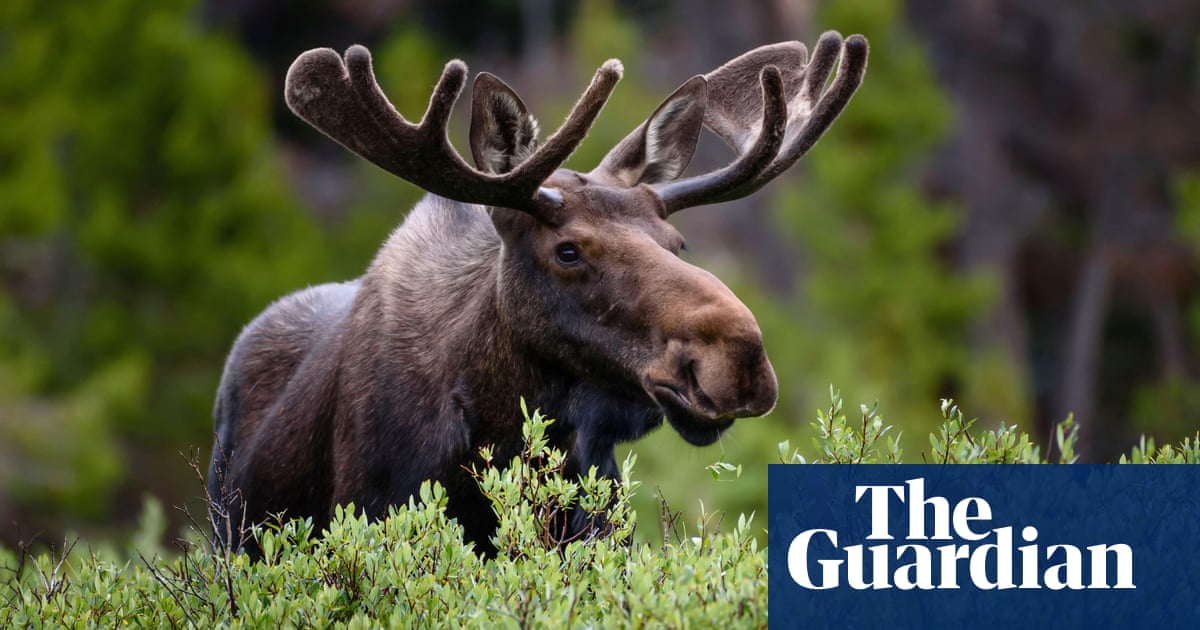
Few creatures evoke the American wilderness like Alces americanus, the American moose. It is the second-largest land animal in North America, behind the bison. Its imposing size is undercut by a goofy countenance â the wide fan of horns, thin legs that suspend a hefty body and a face like a hand- puppet fashioned from a worn-out sock.
Despite their ungainly appearance, however, moose are formidable and sometimes graceful, reaching speeds of 35mph at full gallop. Over time, in Colorado, the moose has emerged as a potent symbol and ambassador of the wild in a state enamoured of its outdoor places, depicted in murals and statues in many mountain towns.
But as much as Alces americanus seems to belong in Colorado, its native range does not extend into the state. Coloradoâs wildlife department introduced moose in the 1970s to help generate revenue through the sale of hunting licences. In that era of wildlife management, the decision of a few high-ranking state officials was enough to set a great ecological experiment into motion.
âWe brought them to Colorado because we could,â said the late Gene Schoonveld, a biologist at the forerunner to Colorado Parks and Wildlife, who was among the officials to set the translocation in motion (Schoonveld died in 2022). âWe had the space and the habitat for them.â
Now, that experiment is reaching a head, and thousands of wild moose roam the stateâs woodlands and mountains â coming into increasing and often deadly conflict with humans.
Though they are notoriously hard to count, there are now an estimated 3,000 moose scattered through Coloradoâs major mountain ranges. That figure, however, does not adequately describe their growing presence â or the way they have transformed the landscape. The comment sections for dozens of hikes on the popular AllTrails app now contain a litany of moose sightings.
Moose have even made their way into the suburban sprawl of Denver, the stateâs capital, browsing in the green belt, sauntering across golf courses or loitering in shopping centre car parks.
As Coloradoâs human and moose populations have grown, so have the number of conflicts between them. Moose attacks in the state now outnumber attacks by bears and pumas (also known as mountain lions or cougars) combined, even though moose numbers are significantly lower.
Over two weeks in the spring of 2022, moose attacked people in three separate incidents. Near the mountain town of Nederland, a cow moose trampled and severely injured a hiker and a dog; a police officer shot her and wildlife officials took her calf into custody. In September 2022, a moose gored and nearly killed a bowhunter in northern Colorado after the hunterâs arrow whistled wide of its mark. More often than not, however, moose come out on the losing end of these clashes. According to the Colorado Department of Transportation, cars struck and killed 59 moose in 2022. In 2012, the number was just four.
In State Forest park, where officials originally released moose in 1978, as many as 700 now roam the area. âItâs the last frontier,â says Tony Johnson, a State Forest ranger. âThere are no chain stores, but moose on every corner.â
Human values have always shaped wildlife policy. In Colorado and elsewhere in the American west, mountain goats, elk and bison have been introduced to places where they never lived before or have been sustained in unnaturally high numbers to satisfy hunters and wildlife watchers. Those efforts have frequently changed the environment dramatically.
Amid the rich willow stands of North Park, the two dozen transplanted moose flown to the state kicked into reproductive overdrive, with many producing two offspring at once â a phenomenon called âtwinningâ that occurs when food is especially plentiful. A decade after their introduction, the moose population had grown to about 250.
The animals proved so successful and popular with residents and visitors that, between 1987 and 2010, wildlife officials transplanted more moose to other parts of Colorado, where they also thrived.
âBiologists generally expected them to do well,â Eric Bergman, a research scientist and moose specialist with Colorado Parks and Wildlife, âand they certainly did.â
Rocky Mountain national park, just east of North Park, is among the places that have witnessed that rapid growth. Park biologists estimate that 40 to 60 moose now wander the western side of the park.
At the Rocky Mountain park headquarters, a landscape ecologist, Will Deacy, shows an infrared image of a mountainside covered in dark trees. A closer look revealed white silhouettes scattered among the pines: moose going about their mysterious business. âThey are a new species in a new context,â Deacy said. âThere is so much we just donât know.â
One of those unknowns is just how moose will affect a landscape already heavily browsed by native elk. Settlers nearly hunted elk to extinction in this part of the state, but in 1913, officials reintroduced them within the protective boundaries of the national park. By the late 20th century, elk here also no longer faced predation by wolves or grizzlies.
The herd ballooned to as many as 3,500 animals by the early 2000s â far more than the maximum of 2,100 that the park service deem sustainable â and rapidly chewed through willow stands. The parkâs willows, a keystone species throughout the Rockies, declined by 96% between 1999 and 2019.
With moose now inhabiting every major valley within the park, there is a fear that these larger animals could have a similar impact.
According to biologists, an adult moose can eat up to 27kg (60lb) of willow a day, far more than an adult elk, which consumes roughly a third of that amount of forage, only a fraction of which is willow. And because national parks ban hunting, moose tend to congregate within their borders, achieving densities almost five times higher than outside them.
That could create new problems for willows and the myriad creatures that depend on them. Research in Grand Teton and Yellowstone national parks by Joel Berger, a wildlife biologist at Colorado State University, found that migratory songbirds, such as warblers and flycatchers, occur at much lower densities where there are large populations of moose.
âPeople love their moose,â says Elaine Leslie, former chief of the National Park Serviceâs biological resource management. But too many of the animals could threaten âthe primary purpose of the park, which is the preservation of resourcesâ.
Leslie sees a potential solution in the reintroduction of wolves to Colorado, which brought 10 animals to the central Rockies in December 2023. Wolves are the main predator of elk and moose, and could ease pressure if they recolonise an area and reduce populations or induce herds to keep moving.
If natural means of moving moose do not work, the park might be forced to explore other, more extreme options such as darting the animals with contraceptive drugs or, in the worst case, culling them.
While Leslie calls moose âone of my favourites,â she says: âIâm worried about what is happening at the ecosystem level, especially in Rocky Mountain national park. That is a very biodiverse area right now.â
Despite growing pains as Coloradoans figure out how to co-exist with this large, non-native ungulate, the state has become something of a de facto refuge for the species. Moose populations in much of their native range across the northern US are plummeting.
In New Hampshire, they declined by nearly half from the mid-1990s to late 2010s, owing to habitat loss and warming temperatures, which triggered a sharp rise in ticks. Wyoming was a stronghold of the species, but today Colorado has more moose than its northern neighbour. And there are signs that Coloradoâs moose numbers may be naturally stabilising: lower pregnancy rates and animals skipping breeding.
Communities are learning to coexist with the animals. In Walden, moose are such frequent visitors that a sign outside town proudly proclaims it to be the âMoose viewing capital of Coloradoâ.
âWe have them in town quite often,â said Josh Dilley, State Forestâs park manager. They especially like to congregate around the elementary school, he explained, âso weâll go sit strategically between the moose and the kids while theyâre going to school.â When moose loiter too long in front yards and public parks, rangers scare them away with firecrackers or non-lethal rubber buckshot. On rare occasions, they sedate an unruly moose with a dart and take it elsewhere by truck.
Still, Leslie warns, without stronger controls and monitoring, Colorado could face increasingly denuded stream banks, more frequent attacks and car collisions â and more moose in the crosshairs.
âItâs partly everybodyâs fault â the state and the feds â because we donât think into the future very well and we donât learn from history,â Leslie says. âUnless everybody gets on the same page, itâs going to get ugly.â